Hello and Welcome to Hydroponics

Saturday, June 30, 2007

Keep Your Food Safe From Deadly Pesticides and Herbicides By Growing Hydroponic Vegetables At Home

Hydroponics is a great, fun and clean way to grow plants indoors by supplying water, nutrients, and oxygen to their roots. Hydroponic growing is perfect for fruit bearing crops such as tomatoes, cucumbers, peppers, lettuce and herbs. By synthetically controlling every aspect of the garden, almost any kind of plant imaginable can be grown using hydroponics! The majority of hydroponic gardeners plant crops similar to what they would grow in a soil garden. If it can be grown in a pot with soil it can also be grown by using hydroponics with a soilless medium. In your indoor Hydroponic garden you must be the sole creator of all aspects of the plants environment

Hydroponics Guide

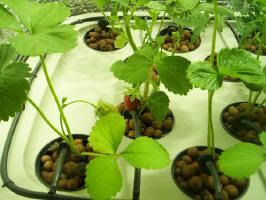
A plant doesn’t require soil to grow. There is no soil in a hydroponics garden, so the plants need to be anchored some how. There are many items which can be used to support plants, these are called soilless mediums. Clay pebbles and Rockwool are the most popular medium. These soilless mediums work best because they are pH neutral and provide plenty of support for plants. They retain moisture, and allow for good air circulation.

pH is one of the most disregarded aspects of gardening, pH is very important in hydroponics gardening. pH is measured on a scale of 1-14 with 7 being "neutral". Anything lower than 7 is acidic and anything above 7 is alkaline (bases). All plants require a certain pH level in order to produce optimum results. The pH level will vary from plant to plant, but in general the majority prefer a slightly acidic level (between 6.0 - 6.5), though most plants can still tolerate an environment with a pH of between 5.0 and 7.5. The preferred method of checking and adjusting pH levels is to use a pH meter. pH adjustments can be made by simply adding a small amount of pH up or pH down solution to your reservoir.

Starting your garden out by planting seeds can be one of the most enjoyable parts of gardening. Seedlings don’t require as an intense amount of light as does a more mature plant. You will want to use a florescent light about 2” above the top of your seedlings. Too much intense light and heat will burn them up and kill them. You will need a propagation tray and humidity dome. Use these to keep your medium and seeds in the perfect environment.

The preferred method for growing vegetables, flowers and herbs year round is with HID lighting, it stands for High Intensity Discharge Lighting, which is a special type of lighting that is much more intense than any other grow lights. Decide what size of light to use. First you need to figure out the square footage of your indoor garden. To do this you will need to measure the space. This is how to find the square footage of your grow space. (Width x Length= Square Feet)

Example: if you want your indoor garden to be in your closet which is 3’x4’, you will find this room to be 12sq.ft. (You will also want the height of your room to be at least 4’ above the canopy of your plants.) For most grow operations an 8-10 foot ceiling will work fine. This will allow you to keep your lamp at least a minimum of 18” above the top of your plants. (HID lights get hot and can burn the tops of your plants.)

Next you will need to know how many watts/square foot of light your plants will require. For Example, tomatoes need to attain around 40-50 watts per square foot for optimal growth. You then would take 50 watts x 12sq. ft. = 600 watts. This means that you will need a 600watt light to maintain your plants optimal growth in this particular garden. (Plants wattage needs x Square Feet = HID light requirement.)

There are 6 basic types of hydroponics systems 1. Drip2. Wick3. Ebb and Flow4. Water Culture5. N.F.T 6. AeroponicA basic Drip system may be the most common of all the hydroponics systems. Drip systems are very easy to use and maintain. An inexpensive submergible pump is used to pump up the nutrient solution onto the soilless medium and onto the plants root system. The nutrient solution then drips back into the reservoir continually repeating this cycle allowing oxygen to be pushed into the solution naturally as it rises and falls. A Drip system can be built as easy as using a new clean 5 gallon bucket, and purchasing a custom made net to hold your medium, and a small submersible pump. The 5 gallon bucket allows for a lot of space for roots to grow.

A premixed nutrient solution is the best way of knowing that your plants get a well balanced diet. There are many brands and types of good hydroponics nutrients on the market. You can be sure that these premixed solutions contain all of the necessary trace elements. Hydroponics nutrient solutions quality is identified by three different numbers such as 15-10-15. These numbers stand for the percentages by weight of the three most primary nutrients: nitrogen, phosphorous and potassium.

Most plants prefer to be between 55-80 degrees F. with the average tempatures at around 72 degrees F. When the lights are on they are a great source of heat as well as light. If temperatures should become too high, exhaust blowers will work well to reduce the temperature. Exhaust blower fans can be easily linked to a thermostat controller to ensure that your room never reaches the high temperatures that can have a negative effect on plants and growth rates. Intake and exhaust fans are rated by there volume of air movement in cubic feet per minute. You will need to know how many cubic feet your grow room has, to do this you measure the length x width x height of your grow space. For a space 3'x4'x10' you will have 120 cubic feet of air space.

By Rory Larkey
Friday, June 29, 2007

Hydroponics - Why Not Start Your Own Hydroponic Garden?

Hydroponics is the cultivation of plants in a nutrient rich solution rather than in soil. It involves growing plants inside without using real sunlight. The word hydroponics comes from two Greek words, meaning "water working".

If you enjoy gardening, but have limiting factors such as very little gardening space, problems with pests or unsuitable weather conditions, then hydroponics could be the answer for you. For many people, the thought of successfully gardening indoors all year around has only been a dream. However, with hydroponics this is possible.


Hydroponics Guide

General hydroponics is a hobby many people are picking up today. Hydroponics is simpler than what most people think, and is proven to have several advantages over regular soil gardening. The following are some of the many benefits of growing plants using hydroponics:

Less space is required, and plants can be grown closer together. Growing plants with hydroponics is possible almost anywhere.

Less water is required as there is no soil which soaks it up before it reaches your plant’s roots. Hydroponics is great in areas where there are water restrictions, as less water is lost to evaporation. When you water your regular garden plants, approximately 10% of the water actually makes it to the plants.

No pests or diseases. You don't have to worry about pest control, and because your plants are grown indoors, there are fewer problems with diseases such as mould and fungi.

Reduced maintenance time. Once your hydroponics system is set up, all you need to do is change the nutrient solution on a regular basis. This only takes a few minutes. There is no need for any weeding.

Types of plants grown with hydroponics:

Nearly all plants can be grown using hydroponics. The most common are vegetables such as tomatoes, lettuce, cucumbers, and peppers. Other plants include flowers and herbs.
Although hydroponics is possible for most plant species, a limiting factor is the amount of physical support required. If you are growing climbing plants, you will need to provide them with extra support.

Hydroponics supplies:

Hydroponics gardening supplies can be found at most good gardening stores nowadays. Before visiting your local store, it is a good idea to do some research online first, so you know what you need. You can also purchase supplies online.

Your grow lights are one of the most important factors for hydroponics gardening. Hydroponics stores sell individual parts as well as complete growing systems. These will include the hydroponics and lighting systems, fans, and timers, etc.

In conclusion, a hydroponics system will initially take a bit of time and effort to set up, but in the end it will be well worth it.

By Susan Fielding

Thursday, June 28, 2007

AeroGrow AeroGarden Hydroponics Kit Review - Indoor Hydroponics for the Rest of Us

Looking for something different for a gift for your gardener? Or something for the cook in your life. It's not often that something completely novel shows up in the world of gardening, but the Aerogrow Aerogarden Indoors Hydroponics kit is something new, that uses technology that did not exist ten or fifteen years ago, and at one point was actually featured in Time magazine.
The Aerogrow system is a completely self contained hydroponics system. Hydroponics is a soil-less system, in which the plant's root system actually grow in enriched or fertilized water.

Because the Aerogarden is a soil-less hydroponic system, it eliminates a lot of the mess associated with indoor container gardens. There is also no risk of soil-borne diseases or pests when using a hydroponics unit.


Hydroponic Book

The Aerogrow Aerogarden kit includes not only the hydroponics system, complete with a computer controlled pump, but a built in adjustable grow light as well. Because of this level of automation, you can set the system up and not bother it for up to two weeks. It includes seed sets for many different types of plants. Ranging from herbs to to salad fixings to small vegetables there are seed kits for many different types of vegetables. You simply set the computer control for the type of seeds you have selected, and you are set to go.

Because this is an indoor hydroponic unit, the Aerogrow system can be used year round. Harvesting herbs and vegetables in the middle of winter is not a problem, and it can be used indoors in the heat of the Southwest summers to keep a supply of vegetables that would normally wilt that far south.

By J Ruppel

Wednesday, June 27, 2007

Hydroponics Gardening Requires Planning

If you are a gardener who wants to garden but has obstacles to overcome in terms of soil and climate, why not give hydroponic gardening a try? Hydroponics is a method of gardening in which you grow plants without using any soil. It has been used in parched African lands as well as by NASA scientists, where the land was unsuitable for growing crops, or there was no soil available. A hydroponic garden does require some planning, however, in order for it to work successfully.


Hydroponics Guide

There are several systems from which you will want to choose. What you finally decide upon will depend on several factors, including the space you can devote to gardening, the lights you will use, how much you wish to invest in the project and how much time you have available to put the system together and to maintain it properly. In the planning phase you will also want to give some thought to expansion of the system and which sorts of plants you would like to grow. You will also need to think about any ongoing costs in terms of necessary supplies and equipment.
Some systems are active or passive in terms of the delivery of the nutrients to the plants. Because the plants are growing in water, an active system uses a pump to aerate the water and to push the nutrient solution around the plant's roots, where the plant can then pick up the nutrient. Passive systems use a wick that the plant uses to bring the nutrients to the roots, and they do not use a pump at all.

Another planning decision will be to select from a water-based or a media-based system. The medium is what the plant grows in, and it is never soil. Instead, medium can include perlite, vermiculite and peat moss, to name only a few. A water-based system often does not use media, and so the plants will need to be supported in some manner out of the water. You can use a trellis for this purpose. A system that is media based provides support to the plants and it also keeps the nutrient solution where it needs to be, by the plant's roots.

The proper lighting will also require adequate consideration. You will probably need to use some type of artificial growing lights in order to provide the plants with enough light to survive, especially if you will be gardening during the dark winter months. A full-spectrum light is an excellent choice for growing plants, because it mimics natural sunlight. Both fluorescent and HID lights work well in these situations.

With some careful planning, you will likely have great success with hydroponic plant gardening.

By Allison Agnock

Tuesday, June 26, 2007

Hydroponics and Orchids

Growing and caring for orchids is a very pleasurable experience for any enthusiast. There is however an alternative to growing orchids the traditional way and that is with hydroponics. Hydroponics allows you to grow crops and plants without soil or compost as the roots of the plants are placed in a mineral nutrient solution.


Hydroponics Guide


The Babylonians and Aztecs cultures grew plants without soil so technically they were using a form of hydroponics. Our technology and scientific knowledge has improved dramatically since the times of the Babylonians and Aztecs as well as our understanding of the benefits
In their natural environment, plants absorb mineral nutrients from soil when these nutrients dissolve in water. The level of our understanding of the required nutrients has enabled us to artificially introduce them into the plants water supply and as a result the soil is no longer required.

Please be aware that there is a difference between hydroponics and a soilless culture. Hydroponics is a type of soilless culture but other soilless cultures include sand and gravel.
There are many advantages using hydroponics which can be applied to the care of orchids.

  • No soil – It should be obvious that you don’t need to purchase any soil. No soil means that soil borne diseases are no longer an issue which reduces the need for pesticides.
  • No weeding required
  • Watering – It is very difficult to under water an orchid but over watering is a very common problem. Hydroponics removes this headache and at the same time saves water.
  • Space – Less space is required with hydroponics.
  • Light – More of the plant is exposed to sunlight. Also, as more of the plant is exposed it is possible to see the roots so identification on any problems is easier.
  • It’s easy – The system is very easy to set up and once set up it requires very little maintenance.
  • Growth – The orchid is given the correct nutrients in the correct quantities which means more beautiful and healthy orchids can be grown.

There are obviously many advantages which hydroponics provides. It won’t however solve all the problems faced by the orchid enthusiast. Greater flower yield isn’t always guaranteed and the costs can sometimes be higher than when grown in soil.

Orchid enthusiasts should make an effort to at grow at least a few orchids using this method. They will be surprised at the ease of using hydroponics and it will only increase their knowledge and experience in the care of orchids.

By Nigel Howell

Monday, June 25, 2007

How Do Hydroponic Gardening Systems Work?

The idea of hydroponic gardening (gardening without soil), has been around since the time of King Solomon. There are a few advantages with hydroponic gardening over traditional gardening -for example the rate of growth of a hydroponic plant can be up to 50% faster than a soil plant grown under the same conditions.
And the yield of the plant is also greater!


Hydroponics Guide


The reason for this is that the plants get their nutrition fed directly into their roots from nutrient rich water. Since this water is so high in nutrient content, the plant does not need large roots to search for nutrition. And since the plant expends less energy in growing roots it has more energy available to be productive above the rootline! Hydroponically grown vegetables are healthy, vigorous, and consistently reliable. This form of gardening is clean and extremely easy, and it requires very little effort.

Hydroponic gardening is also beneficial to the environment. For example hydroponic gardening uses considerably less water than soil gardening because of the constant reuse of the nutrient solutions. And also, fewer pesticides are necessary in hydroponic crops -they are not as necessary. And topsoil erosion is not even an issue since hydroponic gardening systems use no topsoil.

How exactly does a hydroponically grown plant get its nutrition -nutrition it normally gets from the soil? Well, these nutrients come in liquid or powdered mixes and can be purchased at a hydroponic supply store. And like soil, hydroponic systems can be fertilized with organic or chemical nutrients. But you should know that an organic hydroponic system can be considerably more work to maintain since the organic compounds have a tendency clump.

Hydroponic systems are normally categorized as passive or active. An active hydroponic system moves the nutrient solution with a pump. A passive hydroponic system relies on the capillary action of the growing medium or a wick.

In a passive system the nutrient rich solution is absorbed by the medium or the wick and passed along to the plant's roots. But a downside with this method is that they are usually too wet and do not supply enough oxygen to the root system for the best growth rates.

Hydroponic systems are also characterized as recovery or non-recovery. In recovery systems, the nutrient solution is re-circulated for reuse. In a non-recovery system however, the nutrient solution is not recovered.

You may be unsure of whether to buy or build a hydroponic system. If you have an 'engineering mind' and want to build one, consider buying one first just to get familiar with the inner workings. Buy a system which does not cost a lot of money. It will give you a better understanding of how hydroponics works and the hands-on experience can be worth the cost of the system as you will be able to reuse the parts when you decide to build one.

Hydroponics gardening is a popular and growing hobby and many are finding this to be fun, exciting, and easy to get started.

By Tony Buel

Sunday, June 24, 2007

Hydroponic Gardening - The Pros and the Cons

When it comes to some of the problems we are facing in the world with regards to food production, hydroponic gardening offers some promising solutions. In the poorer countries where the terrain or climate is inhospitable to agriculture, hydroponics offers a means of growing healthy foods easily. Also, in those areas where the soil has lost its nutrients or fertile land is hard to come by, hydroponics can produce healthy foods using minimum space and resources.


Hydroponics Guide

As with all things though, it is not all good news. There are many pros and cons any grower should weigh before deciding to commit to hydroponic gardening.

First, the pros. In comparison to traditional farming, hydroponic growing can be more productive in two ways. For one, hydroponic gardening saves space. Plants can be placed much more closely together than in traditional fields because of the way nutrients are provided to them. As many as four times as many plants can be grown in same amount of space using hydroponic techniques! Secondly, hydroponics minimizes many of the problems associated with traditional farming which means less sickly, damaged, or wasted crops.

Because hydroponic growers customize their own nutrients mixes, it takes the guess work out of figuring out which field has the best soil and proper nutrition for which crop. The nutrient mix is the right one for the particular plant, in the right ratios, every time. Also, soil based diseases are virtually eliminated because there is no soil. These two factors alone make hydroponics an extremely efficient method for producing food.

Benefits accrue to the environment as well. The water consumption in hydroponic growing is significantly less than traditional methods. In many cases, hydroponic crops use just one tenth of the water! Also, the water that is used is used more effectively. For example weeds cannot come in and steal part of the crop's water supply. And because the crops are in a controlled environment and not in a field, there is no pesticide run-off water to contaminate the surrounding ground.

The benefits are not without their costs however. The expense of hydroponic growing is an area where improvements need to be made. The nutrient mixtures and growing mediums used can be expensive.

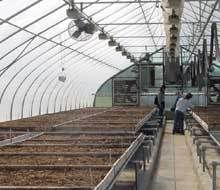
Hydroponic growing also requires an increase in energy consumption. Much hydroponic growing happens in greenhouses, where significant amounts of electricity are used in order to give the hydroponic plants all the light they need.

While research is happening to try and bring the costs down (such as in the field of aquaponics), hydroponics can be financially prohibitive for those areas where it is most needed.

Research in the field of hydroponics is filled with promise and much research needs to be done. Many of the problems are being addressed however, and many farmers and amateur gardeners are eagerly awaiting new developments in this promising field.

By Tony Buel

Saturday, June 23, 2007

Do Plants Grow Better in Water or Soil: The Benefits of Water Gardening

A common question popping up among gardeners lately has been, "do plants grow better in water or soil?" In this article, the benefits of water gardening will be detailed to help you make the decision about whether or not to grow and maintain your flowers and plants using this method.


Hydroponics Guide

There are a number of advantages that make water gardens better than their soil counterparts. The first, and perhaps most obvious of these, is that no soil is actually required to grow your plants! When you consider the inconvenience of acquiring and transporting large quantities of soil, you will find yourself appreciating this aspect of a water garden very quickly.

Two very important factors should also be considered: firstly, a water garden's lack of soil means that diseases normally contained within the soil itself are theoretically eliminated; secondly, and on a larger scale, there will be no weeds and less insects present to inhibit the growth of your plants. These two things will lead to better results and, in turn, a better overall garden.

Given both of these truths, you'll require fewer pesticides and herbicides to grow healthy plants. Should you intend to grow flowers or propagate your plants, the lack of chemicals and soil contaminants will keep you and your family feeling safe and happy about the beauty and longevity of the flowers and plants that you grow.

Despite the fact that it's a water garden, the actual consumption of water will be less than with a soil garden. You'll have no need to keep a sprinkler or hose trained on your plants, which will save you money in the long run - not to mention that you'll also be less reliant on rain to keep your water bill low at the end of the month.

A water garden allows you to better monitor the growth of plant roots as well, which is virtually impossible in a soil environment. Should you desire to transport your plants from one location to another, those you grow using hydroponics will stay alive so long as they are kept in that condition. Plants you grow in a soil garden are effectively killed as soon as you pull them up.
In addition, you have the advantage of better space usage. Should you desire to grow a large quantity of plants for any reason, you will be better able to do so with a water garden - you can easily stack trays and containers on shelves or hang them in the air, thus freeing up area to grow more.

All of these advantages are enough to make a water garden a better choice than a traditional soil garden. To grow better plants with fewer resources is a worthy goal, as is having beautiful flowers and plants for you and your family to enjoy.

By Matthew Harley

Friday, June 22, 2007

Starting Small - What Hydroponic Beginners Typically Grow First

Hydroponics is the concept of soil less gardening. The wordhydroponics comes from two Greek words, "hydro" meaning water and"ponics" meaning labor. This concept has been around for thousandsof years and many countries, including China, Holland, Germany, and Australia have used hydroponics for crop production with resultsthat are quite amazing.


Hydroponics Guide

Hydroponics is proven to have several advantages over regular soilgardening. The growth rate on a hydroponic plant is 30 to 50%faster than a soil plant that was grown under the same conditions. The yield of the plant is also greater. There are many reasons forthe drastic differences between hydroponic and soil plants. Rootgrowth is stimulated in the hydroponic plants due to the extraoxygen. Plants with plenty of oxygen in the root system will alsoabsorb nutrients faster. The nutrients in a hydroponic system aremixed with water and sent directly to the root system. The plantwill not have to search the soil for the nutrients it requires asthe nutrients are being delivered to the plant several times perday.

Hydroponic systems use apparatus that are varied. There are twobasic divisions between systems: water culture and media based. Systems may also be active or passive. Active systems use pumps andusually timers and other electronic gadgets to monitor theoperation. Passive systems may also incorporate any number ofgadgets. These systems try not to use pumps and may rely on theuse of a wicking agent to draw nutrients to the roots. Media basedsystems use some form of growing medium. Some of the more popularmedia based systems include ebb and flow system; run to wastesystem, drip feed system, and bottom feed system. Water culturesystems do not use medium. Some of the more popular water culturesystems include raft systems, nutrient film techniques, andaeroponics.

Hydroponic gardening requires an energy source in order to grow. Usually, natural sunlight is used, but during the shorter anddarker days of winter, many hydroponic gardeners use artificiallights to increase the intensity of light or to expand the daylightlength. Different types of artificial lighting are selected forspecific plant varieties and optimum plant growth characteristics. Different groups of plants will respond in different ways tovarious wavelengths of radiation. Light also plays an extremelyimportant role in the production of plant material. The lack oflight is the most inhibiting factor in plant growth. Cropperformance will be reduced as the light is reduced.

In hydroponics, nutrient solutions are used to feed plants insteadof using plain water. This is due to the fact that the plants arenot grown in soil. When growing hydroponically, the gardener willneed to add all of the nutrients the plant needs to the water. Distilled water will work best for making the nutrients. Hydroponic supply stores sell a variety of nutrient mixes forspecific crops and growth cycles. Plants can be propagated by anumber of methods. The grower can let a plant go to seed, collectthe seed, and start the cycle all over again, which is calledgermination. Another method is to take stem cuttings, also knownas cloning. This process does not work with all plants, but it isconsidered a highly effective technique. The gardener should alsoprune the hydroponic plants regularly. The plant might need to bepruned to focus its energy on the remaining shoots. However,pruning is an art and should be performed with care. Damaged ordying roots may also need to be pruned from time to time. Different plants also have different germination and growingtemperatures. The gardener should check each plant's growingrequirements on a regular basis.

For more information check out the whole package at homemade-hydroponics

Thursday, June 21, 2007

The History and Growth of Hydroponics Systems

Hydroponics means working water and comes from the Greek words 'hydro' and 'ponos', meaning water and labor. Many different civilizations have utilized hydroponic growing techniques throughout history so they are not a new method of growing plants. Giant strides have been made over the years in this innovative area of agriculture.

Throughout the last century, scientists and horticulturists have experimented with different methods of hydroponics. One of the potential applications of hydroponics that helped continue research was for growing produce in non-arable areas of the world. Hydroponics was also integrated into the space program as hydroponics easily fit into their sustainability plans. The research for their plans is ongoing.

Hydroponics Guide


By the 1970s, scientists and analysts wee not the only people interest in hydroponics. Traditional farmers and eager hobbyists began to be attracted to the virtues of hydroponic growing. Some of the positive aspects of hydroponics include the ability to produce higher yields than soil-based agriculture and they allow food to be grown and consumed in areas of the world that cannot support crops in the soil.

Hydroponics also eliminates the need for massive pesticide use, which makes the air, water, soil, and food much cleaner. Commercial growers are changing to hydroponics like never before as the ideals surrounding the growing techniques touch on subjects that interest most people, including world hunger and making the world cleaner.

Everyday people have begun to purchase their own hydroponic systems to grow great tasting and fresh food for their family and friends. Educators have also begun to realize the amazing applications that hydroponics can have in the classroom. Many gardeners have made their dreams come true by making their living in their backyard greenhouse and selling their produce to local restaurants and markets.

The potential of hydroponic culture is incredible, but commercial hydroponics in the United States was held back until hydroponic systems that were economical to build and relatively easy to operate became available in the marketplace. With the advent of high tech plastics and simpler system design, this came about in the late 1970s. The energy saving poly greenhouse covers, the PVC pipe used in the feed systems, and the nutrient injector pumps & reservoir tanks were all made of types of plastic not available prior to the 1970s.

As both small and large hydroponic farms were established in the late 1970s, it was proven that hydroponic culture could produce premium produce and be a profitable venture. As hydroponics attracted more growers, complete plant nutrient formulas, and hydroponic greenhouse systems were being marketed. Environmental control systems were being developed to help growers provide the ideal plant environment in addition to the ideal plant diet.

Commercial crop growers are turning to soil less cultivation more and more. The speed of growth combined with the control over the growing environment means higher quality crops. The worry over soil born diseases and pests are greatly reduced, plus weeding is a thing of the past. For commercial growers, rapid harvest and higher yields are great reasons to grow hydroponically. The techniques used by commercial growers are now available to the home gardener.

Hydroponics may be used in underdeveloped countries for food production in limited space. It is even feasible to grow hydroponically in areas of poor soil conditions, such as deserts. The desert sand serves as a good growing media and seawater can be used to mix nutrient solution once the salts have been removed. The popularity of hydroponics has increased dramatically over a very short period of time. Experimentation and research in the area of indoor and outdoor hydroponic growing is an ongoing process.

By Tony Buel

Wednesday, June 20, 2007

How is Hydroponic Gardening Different from Regular Gardening?

When growing hydroponics, there are a vast variety of growing mediums that may be used. The mediums include materials, including perlite, vermiculite, coconut fiber, gravel, sand, or any number of other materials. Even air may be used as a hydroponic growing medium. The hydroponic growing medium is an inert substance that does not supply any nutrition to the plants.


Hydroponics Guide

All of the nutrition comes from the nutrient solution, typically combining water and fertilizer. Hydroponic fertilizer and fertilizer intended for use in soil (regular fertilizer) contain the three main nutrients. These nutrients are nitrogen, Phosphorus, and potassium. The main difference between hydroponic fertilizer and dirt fertilizer is that hydroponic gardening fertilizers contain the proper amounts of all of the essential micro-nutrients that regular fertilizers do not include. The plants are expected to find these elements in the soil.

Problems may arise for the plants if any or all of the micro-nutrients are not present in the soil or have been depleted by successive or excessive plantings. Hydroponic gardening fertilizers are usually in a more pure form than are regular fertilizers so they are more stable and water-soluble.

Organic fertilizers are typically very different than either the hydroponic fertilizers or the dirt fertilizers in how the deliver nutrients to the plants. The organic fertilizers rely on the action of bacteria and microbes to help break down the material into its basic elements so the plant can easily use it. Hydroponic and regular fertilizers then supply the plants with these elements.

Another difference between hydroponic and regular gardening is that growing hydroponics can be extremely complicated. Hydroponics are controlled with computers and sensors which help control everything from watering cycles to nutrient strength, and the amount of light the plants receive. However, hydroponics can also be very simple. The average home hydroponic system usually consists of a few basic parts, including a growing tray, a reservoir, a timer controlled submersible pump to water the plants, and an air pump to oxygenate the nutrient solution. Light is, of course, also required to help the hydroponic garden to grow.

There are also micro-nutrients that are required for healthy plant growth. These micro-nutrients include calcium, sulfur, magnesium, boron, cobalt, iron, copper, manganese, zinc, and molybdenum. These nutrients are the essential elements that plants need in very small amounts. Plants are likely to become sick without these trace elements and will develop all sorts of problems depending on which nutrient is missing.

The lack of micro-nutrients in food crops can mean a lack of nutrients in the food. This will result in the food not being as healthy as it could be and potentially lead people to develop health problems due to the lack of these essential elements. Any hydroponic gardener needs to use a good quality hydroponic fertilizer when they are growing plants using hydroponics.

It is also vital that the pH is controlled in both growing hydroponics and in the soil as well. Plants lose the ability to absorb different nutrients when the pH varies. The pH must be monitored during the entire growth cycle of the plants to maintain the maximum healthy uptake of nutrients. The pH of the nutrient solution will affect how well each element can pass through the root cell wall to nourish the plant. Once the gardener has properly calibrated the fertilizer concentrations and the pH of that solution, they can generally assume it will stay steady barring any unforeseen root disease.

Gardeners should always monitor their system too much rather than too little to avoid any problems. The ability to quickly and easily test and control pH in hydroponics is a major advantage over regular gardening, where testing and adjusting the pH is much more complicated and time consuming.

By Tony Buel

Tuesday, June 19, 2007

Tips on Making your Own Hydroponics System

If you're going to build a hydroponics system, it's best to beginwith a container to use as a reservoir. For homemade systems, it'sbest to use a fish tank or a similar object. Once you find asuitable reservoir, you must paint it black. The black pain willmake your reservoir light proof, because if light enters thereservoir it will promote the growth of algae. It is also a goodidea to score a line on your reservoir once it is painted( use aknife, and scratch off paint in a straight line from top tobottom), which allows you to monitor the amount of water in yourreservoir. Some people may not have to score their reservoir ifthey use a floater (Styrofoam), which indicates the amount of waterin the reservoir by sinking. However, the line will give a view ofthe nutrient solution level.

Styrofoam should be used in your homemade reservoir. Beforeinstalling the Styrofoam into your reservoir, you should use a tapemeasure to measure the reservoir, from inside of the reservoir fromone end to the other. Once your reservoir is measured, cut theStyrofoam 1/4" smaller than the size of the reservoir. TheStyrofoam should fit nicely into your reservoir, and have enoughroom to adjust to changing water levels. Making your ownhydroponics system also requires you use net pots, and you shouldcut holes in the Styrofoam for the placing of the net pots. A holeshould also be cut into one end of the Styrofoam to allow for theairline to run into the reservoir.


More Information

When creating your own hydroponics system, it is also important toconsider how many plants you want to grow. The amount of plantsgrown should depend on the size of the garden you build and thetypes of crops grown. Plants should also be space appropriately soeach plant receives a generous amount of light. It's also importantto choose a strong pump for your hydroponics system. A strong pumpshould be able to provide enough oxygen to sustain plants. It'sbest to employ the help of a professional when choosing a pump froma hydroponics supply store. Giving the professionals informationabout the size of your reservoir should make it easier for them tomake a recommendation.

After installing a pump attach an airline to the pump and attachingan air stone to the other end of the line. It's important to makesure your airline is long enough to travel from the pump into thebottom of the reservoir. If the airline is not this long, then itshould float in the middle so oxygen bubbles can get to the roots.The line should also be the right size of the pump you choose, andmost pumps come with the right size airline. It's advisable to usea one-gallon bottle to fill your reservoir, which allows you tofigure the capacity of your reservoir.

Lighting is very important if you're building a hydroponics systemindoors. If the system is inside, you'll have to provide artificiallighting for your plants to thrive. The size of the garden willdetermine how many light fixtures and how many watts will be neededto provide proper light. It's a good idea to visit a lightingstore, where you will be able to receive more information on lightsto use for your system. When plants are in growth phase, they willneed high intensity discharge lamps. When plants are in bloom,high-pressure sodium lights increase yields and will grow denserand heavier flowers. Using fluorescent lighting is also an option,but fluorescent lights don't offer the same amount of lumens as theothers. Fluorescent lights are better suited for starters andseedlings and for growers with ventilation problems. Fluorescentalso burns cooler than other lights, which allows you to place yourplant closer to the light source without damaging them.

For more information check out the whole package at homemade-hydroponics

Monday, June 18, 2007

Growing Indoors With A Hydroponics Growing Systems

Growing indoors with a hydroponics growing system is as enjoyable and rewarding as the weekend gardening enthusiast who cultivates the soil and care for there plants then can reap the end results of there fruits.

A hydroponics growing systems consists of growing plants in nutrient solutions without the use of soil.


Hydroponics Growing Systems

Hydroponic growing of plants began in the 1930s as an extension of the culture techniques used by plant horticulturists in plant nutrition experiments.
More recent successful methods of hydroponic growing differ in but have two common features:

  • Nutrients are supplied in liquid solutions;
  • Plants are supported by porous material, such as peat, sand, gravel, or rock wool, that serves as a “wick” in supplying the nutrient solution from its source to the roots of the plant.
Even a outdoor garden can be built and maintained using hydroponics, but the results may not be the same as growing indoors with a hydroponics growing system.

With indoor hydroponics growing systems you are the master who starts plants from a seedlings, or clone to vegetation and when you want to flower your plants.

You control the elements like a parent raising there kids from providing nutrients, light and a healthy insect free Growing indoors with a hydroponics growing system is as enjoyable and rewarding as the weekend gardening enthusiast who cultivates the soil and care for there plants then can reap the end results of there fruits.

The beauty of indoor growing is you can grow any plant, or vegetable you like without the concern of the growing season for the plant as compared to growing outdoors where there are specific times of the year to grow and flower your crop.

The most popular basic types of hydroponics growing systems are the Ebb and Flow(flood and drain) and the Raft system which are explained below with a more sophisticated system known as the aeroponics system.

Ebb And Flow System:

Ebb and Flow hydroponic growing systems are about the best I have used. The plants grow strong and vigorous, can be spaced closer together and a variety of crops can be grown at the same time.

The ebb and flow can be either of a bed design or can use pots, 5 gallon containers for plants that grow tall and have large root systems.

The system functions as flood and drain..hence the the ebb and flow was born.

Timers are used to regulate the feeding cycles at pre designated intervals which raises nutrients to the top of the grow box, or pots for a certain length of time then drains back to the reservoir drawing in rich oxygen to the roots, removing stale air while the plants are fed and the medium is kept in a moist state until the next cycle.

Raft System:

The Raft systems are probably the most basic form of hydroponics growing systems available. The way they function is fairly simple to understand. The roots of the plants are constantly submerged under water and a pump is used with an air stone to provide aeration.

These hydroponics growing systems consist of grow lights, reservoirs, timers, pumps etc.. which can be home made or purchased at a hydroponics store.

Gardening with a hydroponics growing systems can be as rewarding to the indoor gardener as the rake and shovel is to the outdoor gardener.

If you are a person who enjoys watching things grow with rewarding end results you can see more on how these systems work and how to build one at my web site...then you can consider the benefits of hydroponics growing systems. for your plants to thrive and grow to maturity.

By Chet Holcomb

Sunday, June 17, 2007

Hydroponics is the Future of Farming

Hydroponics is the only way that in the future we can grow crops and food to sustain the earth.


Website Promotion Service

These days we are losing land at such a rapid rate there is no telling how soon we will run out of land to develop. If we continue to grow at such a speed eventually the only land that we have which is still able to be developed is farmland. The thing is that if we use our farmland to put up condos as we are with the rest of the open land we will have no more room for our crops that we grow to survive. This has been a potential issue for year which is why scientists have developed another way to grow food and plants without utilizing land which is a fast depleting resource.
The great thing about hydroponics growing is that anyone can do it. If you have the knowledge and the right equipment you can do it yourself out of your home. This means that individuals that live in downtown areas and have no yard space for a garden can grow vegetables and fruits and herbs without having to trudge down to the grocery every day.

The equipment to grow plants using a hydroponics system is easy to obtain and can be easily picked up at a local store or over the internet. They are reasonably priced and easy to use. All you have to do is follow the enclosed instructions and you will soon be on your way to free groceries.

As previously stated, the land that we have here on earth is a valuable but rapidly depleting resource. There is no way to recover more once we use all of it up. The only answer to this is to learn alternate methods to do things that take up the majority of our usable land. Farming is that thing and hydroponics is a way to cure the problem.

By Jason Montag

Saturday, June 16, 2007

Hydroponics Lighting: Blue Spectrum V.S. Red-Orange Spectrum

Hydroponics Light plays a major part in your success of your hydroponics project. Most hydroponic gardens are indoors and as such they need to have lighting of some kind. While you may be tempted to try using incandescent bulbs and lamps for light in your hydroponics system, they don’t provide the right kind of light that your plants will need to thrive and grow. Hydroponics systems need full spectrum lighting that mimics the light from the sun. Specific types of hydroponics gardens will also need a specific type of lighting.


Website Promotion Service

Many of you that are looking to put together a hydroponics kit will find that there is a range of hydroponics lighting on the market.

Hydroponic vegetables grow best in blue spectrum light, which is a cooler form of light. Metal Halide lights are the most popular form of blue spectrum lighting. Hydroponics flowering plants grow best in red-orange light. The best type of red-orange light is the high pressure sodium light (HPS).

Blue spectrum light is great for leafy plants, such as Lettuce, Radish, or Collard. It also helps to keep the plant nice and compact. Many can find the plants in their hydroponics garden getting leggy as it strains for the light, blue light helps to combat this. This is the best type of hydroponics system light for a primary light source. The average Metal Halide light gives around ten thousand hours of good light. After that it will start to put out less and less light. The average Metal Halide light sold can put out a range of light from 175 watts to 1000 watts or more. The wattage output you choose depends on how big your hydroponics system is. Are you just putting together a small homemade hydroponics kit or are you setting up a larger hydroponics garden?

High Pressure Sodium lights producing an orange-red spectrum last around eighteen thousand hours of use. It’s best for flowering plants, such as paper whites and iris. The orange-red light stimulates plants hormones, which makes for more flowering in the plant. Be careful about placing a young plant under red-orange light. It may grow very quickly but you will see only vertical growth and it will become lanky and thin. This is because of the lack of blue spectrum light available to the new plant. The average wattage is about the same for red-orange lights, ranging from 175 to 1000 watts. Of course if your looking to cover more area then you can find professional grow lights in any spectrum with a higher wattage.

The best way to light your hydroponics system seems to be with a combination of blue and red-orange light, to keep plants compact and flowering. Or you can simply purchase a full spectrum light. You can buy fluorescent lights for this. They are available in tubes or compact bulbs. Fluorescent lighting is mostly used to grow seedlings, but it will certainly grow a plant to maturity. This type of lighting can be an easy way to light your hydroponics system without the complication of hooking up both blue and red-orange lights or remembering which is which.

By Jack Stone

Friday, June 15, 2007

Hydroponic Plant Systems - What, No Dirt?

Simply put, hydroponics is the growing of plants without soil. The word "hydroponics" comes from the Greek word hydro, which means "water" and ponos, which means "labor or water-working."

Typical Dirt Gardening:

All plant leaves need light, oxygen and carbon dioxide. Plant root systems require water, nutrients and oxygen. When plants are grown normally (in soil) water takes nutrients from the soil and carries them to the plant roots. The water and nutrients are taken up by the roots to feed plant growth. Soil drainage then allows water to be replaced by air in the gaps between soil grains. This supplies the roots with oxygen.

Hydroponic Gardening:

In hydroponic plant systems, you dissolve the nutrients in water. Soil is replaced with a "growing medium" - a soil substitute - that holds the roots and supplies them with water, nutrients and oxygen.

You can deliver the nutrient solution a couple of ways: You can drip feed it to each plant, or you can flood the root chamber, then drain it out. These methods require a pump and timer to circulate the nutrients through the roots. You can also grow the plant roots in the air by spraying them with a fine mist of nutrient solution, or grow them by aerating the solution under each root mass with an air pump.

Actually, six basic types of hydroponic systems make up the basis of all hydroponic gardening.

  • Wick
  • Water Culture
  • Ebb and Flow (or Flood & Drain)
  • Drip
  • Nutrient Film Technique (N.F.T)
  • Aeroponic
Let's take a look at these 6 basic hydroponic plant systems:


Wick

The wick system is the simplest and easiest to build of all the systems available. It is also passive, with no moving parts. It requires no electrical energy source or special attention.
The nutrient solution is drawn into the grow bed from the nutrient reservoir through the capillary action of wick material and absorbent grow media. When plants get very large, they may use nutrients faster than the wicks can supply them.

Water Culture

The water culture is another very simple hydroponic system. Plants grow with the roots suspended in the nutrient solution. The structure that holds the plants is usually made of styrofoam and floats directly on the nutrient solution. An air pump delivers the nutrient solution and oxygen to the plant roots. The main disadvantage of a water culture system is that it doesn't work well with large plants or with long-term plants.

Ebb and Flow (or Flood and Drain)

The ebb and flow hydroponic system works by temporarily flooding the grow tray with nutrient solution and then draining the solution back into a reservoir. Usually the pump is submerged and is connected to a timer.

The ebb and flow system can be used with a variety of growing media. The entire grow tray can be filled with grow rocks, gravel or granular rock wool. You can use individual pots filled with growing medium. This makes it easy to move plants around or even move them in or out of the system.

Drip Systems (Recovery and Non-Recovery)

Drip systems are probably the most widely used type of hydroponic plant system. Basically, a timer controlled pump delivers nutrient solution to drippers located at the base of each plant. In a Recovery Drip System the excess solution runs off and returns to the tank for re-use. A Non-Recovery System does not collect the run-off which therefore goes to waste.

Nutrient Film Technique - "N.F.T."

This is another very popular hydroponic system. A constant flow of nutrient solution pumped from a tank flows over the roots of the plants in a tube or tray and then returns to the tank. The growing medium is mostly air, plus whatever medium was used to grow the plant from a seed or cutting (usually rock wool or perlite.)

Aeroponic

The aeroponic system is probably the most high-tech type of hydroponic gardening. The growing medium is primarily air. The roots hang in the air and are misted every few minutes with nutrient solution. A timer controls the nutrient pump much like other types of hydroponic systems, except the aeroponic system needs a short cycle timer that runs the pump for a few seconds every couple of minutes.

Many growers prefer hydroponic plant systems and believe them to be a far more efficient way to provide water and nutrients to their plants. Since food and water go directly to the roots, the plant is able to spend more energy growing above the surface, producing more vegetation, larger fruit, flowers and vegetables.

By Robert Mosse

Thursday, June 14, 2007

The Passive Irrigation Technique Defined through Hydroponics

Passive Irrigation is one technique that is used in the hydroponicworld. For those of you who are not familiar with hydroponics, itis defined as the act of gardening without the use of soil. Insteadother media is used, or no media and only water is used.

One method of irrigation for hydroponic systems is passiveirrigation (or subirrigation). The growing medium (gravel,vermiclulite, perlite, rockwool, or other pourous material) usedfor this type of irrigation generally has large air spaces. whichallows sufficient amounts of Oxygen to reach the roots of theplants.


Website Promotion Service

The simplest way to construct a hydroponic system with passiveirrigation is to have a container continually sit in a layer ofhydroponic plant nutrient treatment. This plant could sit on acapillary mat as well that is soaked with the right nutrients thatyour plants need. This keeps the medium that you use for growingyour plants flushed regularly with nutrient solution and air.

The simple passive irrigation method described above is thesimplest way for hobby gardeners to get started. It could also be agreat start for commercial farmers on a large scale. You will needto know other information about this type of irrigation as well.

For instance, you need to be aware that it is necessary to wash outthe passive irrigation system from time to time to remove saltaccumulation. You can measure salt buildup in your system with anelectrical conductivity device or a ppm meter. An average readingof 1500 ppm is acceptable, depending upon the plant you will grow.

Some exceptions do apply, however. For instance, lettuce is said togrow well at about 800 ppm and tomatoes are said to grow the bestat about 3000 ppm. Another very important aspect of maintenance of your passiveirrigation system is to make sure you test the pH levelperiodically. It is recommended that it is set at 6.3, but you canfind information, which will tell you the optimal pH settings ofeach one of the plants you intend to grow.

On a larger scale, passive irrigation systems have become a part oflandscape architecture. For example, surrounding some Europeanpublic buildings is a hydroponic system that uses small claygranules for the medium, and small houseplants are grown inside.

An alternative passive irrigation method other than the onesdescribed above includes the use of a wick. This wick runs downfrom the base of the pot or tray of a plant down to a bottle ofnutrient solution. The solution travels up the wick in a similarway that an air freshener scent would to help scent the air. Theuse of the wick is how the plant nutrients are supplied, whichworks in a similar way to the first method described in thisarticle.

Other very important factors of making a hydroponic system work foryou include making sure you have adequate light and adequate space.The forms of light that you can use are natural sunlight andartificial light. Both types of light will produce the right amountof radiation that your plants need. Usually space is not a problem,but you will need at least the minimum amount required for yourplants to grow, which is usually less than for traditional gardens.

A similar type of irrigation is called top irrigation. Using thismethod, a nutrient solution is applied periodically to the mediumsurface, rather than underneath the plant. However, this is moredone automatically, as in the case of most active irrigationssystems. Therefore, it is different than the passive one.

If you want to learn more about hydroponic planting and otherirrigation types besides the passive irrigation you can read morearticles like this one

For more information check out the whole package at homemade-hydroponics.com

Wednesday, June 13, 2007

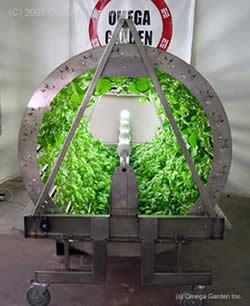
The Omega Garden, The Ideal Commercial Hydroponic System or For The Indoor Grower

In today's world if there is space we will fill it and now with less and less space to grow, vast acres of farmland are hard to come by. Not to mention the environmental strain the farming puts on the land and our resources. But with the Omega Garden there is always room to grow. . .up! That's why the Omega Garden is such a wonderful method of vertical farming, which I'll discuss in greater detail later. The Omega Garden is a rotating hydroponic garden that can be used just about anywhere. It comes in a variety of sizes so there is a unit for every type of grower from the apartment dweller to the commercial farmer. It is THE ideal commercial hydroponics system.


Website Promotion Service

The Omega Garden is a cylindrical unit that rotates around a light source so that all plants maintain the same level of lumens while being supplied with the proper amount of nutrients from a tray at the bottom. The Omega Garden rotates the plants continuously, as the plants rotate into the tray the roots are dipped into the nutrient solution supplying the plant with food and water. The Omega Garden utilizes less resources than a traditional plot of farmland. The nutrient solution is reused over and over as the plants rotate so there is less water used and it definitely uses less electricity. The Complete Omega Garden utilizes less than 1300 watts of power while at the same time yielding a 3-5 times larger crop than other growing methods from 50-300 plants, depending on the variety of plant you chose to grow.

The Omega Garden relies on a concept they have named orbitropism based on geotropism which is when auxins which are plant growth hormones that aid in plant growth and strength. As the Omega Garden rotates the auxins are distributed evenly throughout the plant instead of being pulled downward from the effects of gravity. The rotation and the even distribution of the auxins allows the plants to grow stronger much faster.

But not only does the Omega Garden maximize your growth rate while minimizing the consumption of electricity it also is environmentally friendly. Vertical farming with the Omega Garden is an important step in saving what little land we have left. We are already using the 80% of available farm land and 15% of that land has been ruined due to poor land management. As the population grows we can already see that we have nowhere left to grow more food. But with vertical farming and the increase of the population living in urban areas we can farm indoors in any area at any time of the year. This can greatly increase our food supply while at the same time decrease the strain on our dwindling resources. Vertical farming with the Omega Garden is also more economical since there is less crop loss, less power used, less manpower needed, and less water used. So with the Omega Garden you get more product for less money! Use this commercial hydroponic system for your commercial farming needs or simply grow your own veggies at home in your garage or basement.

The Complete Omega Garden comes with just about everything you need to get started for . The assembly is easy and it is even on wheels so you can move the garden if needed. With the Omega Garden you can grow more, pay less, and feel good about yourself for helping to contribute to the new wave in farming by vertically growing.

By Kirsten Corsaro

Tuesday, June 12, 2007

Introduction to Hydroponics Gardening and Tips for Its Maintenance

Hydroponics gardening is well known among people with small opportunities to have a room enough for a real garden. If you lack natural soil or a place for a garden, hydroponics gardening can be the perfect solution to this problem. It will allow you to grow nearly all kinds of plants- flowers as well as vegetables, using a certain amount of nutrient solution. In hydroponics gardening the nutrient solution is used instead of soil, and plants seem to admire it. The thing that strikes most is that hydroponics gardens can be maintained in almost every place you may come to think of, and plants can be grown everywhere.


Website Promotion Service

There are several advantages of growing plants in a hydroponics garden. The first thing that springs to mind, is that hydroponics gardens are extremely easy to maintain. You need only five minutes daily for maintenance of your garden. The nutrient solution should be changed once a month, so that its nutritive qualities are preserved. The overall time you have to spend on your hydroponics garden is negligible small, and the results are the best possible. Nearly all plants can be grown in a hydroponics garden, except bigger fruiting vegetables like tomatoes and peppers. Flowers are perfect for the hydroponics conditions.

There are several types of hydroponics garden systems used in hydroponics gardening. The passive system is the most exploited. Here the plants are grown directly on the nutrient solution. The solution has one drawback- it may easily become deoxygenated. To prevent this, all passive systems use an aquarium air bubbler, otherwise the deoxygenated solution could rot the plants. The most important thing before taking on hydroponics gardening is to find the appropriate system that bests suits your needs. If you find it, hydroponics gardening may supply you with all the flowers and vegetables you need.

By Robbie Darmona

Monday, June 11, 2007

Hydroponics - A Novel Blessing of Science

The term hydroponics stands for the technique of cultivating plants in a nutrient solution rather than in soil. It’s a novel technique of growing plants in water which contains dissolved nutrients. This technique is also known as indoor gardening, aquiculture and tank farming.

Studies have proved the fact that plant roots are able to absorb the nutrients from the water even without soil. The new technique hydroponics is based on the concept that plants can be grown without any soil at all.

Professor Gericke of the University of California, Davis, is considered the father of hydroponics. Professor Gericke, in 1929, proved his invention by growing tomato plants in water to a quite remarkable size. The Professor coined the name hydroponics for the culture of plants in water.

Almost any plant can be made to grow through hydroponics. Today, the new techniques of hydroponics gardening and hydroponics farming are becoming popular.


Website Promotion Service


Benefits of Hydroponics:

Hydroponics is a very useful technique when there is scarcity of land, and it is growing extremely beneficial and profitable to farmers. The positive aspects of hydroponics are listed below.

Hydroponics --

• Gets rid of soil-borne diseases and weeds.

• Requires no soil tilling or ploughing.

• Helpful in land scarcity; plants can be placed very close to one another.

• Can be done in small spaces.

• Highly productive; high yield, large amount of food can be produced from small spaces.

• Requires only a small amount of water compared to traditional farming.

• Allows the production of quality plants under controlled environmental conditions.

• Makes it possible to grow plants all year round.

Future of Hydroponics:

The future of hydroponics seems to be quite bright. As plants are grown indoors, they can be made to grow almost anywhere, in any condition and any weather.

It’ll make it possible to grow plants in Antarctica. The techniques such as hydroponics or aeroponics may make it possible to grow vegetables and fruits in space in some near future.

By Paul MacIver

Sunday, June 10, 2007

Common Nutrients that Every Growing Hydroponic Plant Needs

No matter what type of garden that is grown plants need the samenutrients. The way these nutrients are supplied is the difference.For example, hydroponic planting requires a different method ofsupplying nutrients to plants than does the traditional soilplanting method.

In hydroponic gardening, the fertilizer that is given to plants hasall the nutrients that plants need. In soil gardening, thefertilizer used for plants does not contain all the nutrientsneeded, because some of them are in the soil. This is the biggestdifference, but nevertheless both methods of planting do not changethe type of nutrients that plants need, which are 16 major ones inall.

Some of the major nutrients that plants need are listed as follows:

  • Nitrogen: This nutrient helps promote the growth of new leaves onplants.
  • Phosphorous: Roots of plants mostly need this material to helpsupport the plant. In addition, this material helps aid the plantblooming process.
  • Potassium: This mineral helps build a plants immune system. Inaddition, Potassium also helps a plant to grow in extreme cold andheat.
  • Sulfur: This substance aids in giving leaves a rich dark greencolor.
  • Calcium: This nutrient along with phosphorous helps the roots ofplants to grow. It also aids in helping new shoots of plants togrow as well.
  • Magnesium: This is what helps produce the chlorophyll, thesubstance that gives plants its green color and helps the plant toabsorb sunlight in order to make food.

The above list of plant nutrients needed is commonly known asmacronutrients. The three most important of these is usuallythought of to be the Nitrogen, Phosphorous, and Potassium. However,all of these help aid in successful plant growth.

Other plant nutrients needed are commonly known as micronutrients,which are usually needed in smaller numbers than themacronutrients. These include Boron (B), copper (Cu), cobalt (Co),iron (Fe) manganese (Mn), molybdenum (Mo), and zinc (Zn).

When plants receive the right nutrients they are able to producetheir own food. This is done by way of a process of photosynthesis,which happens with the use of elements such as carbon dioxide,hydrogen, and light. This produces carbohydrates, which suppliesenergy for plants, and oxygen is a by-product which is necessaryfor all living creatures.

One thing you want to keep in mind when attempting to construct andmaintain a hydroponic garden is that these types of gardens requiremore of a continuous nutrient supply. However, one mistake thatgardeners make is to over-do the amount of nutrients that theysupply to their plants.

Ordinarily roots will absorb water that a plant needs in order forthat plant to live and grow. This process is called osmosis.However, if too many nutrients are added to the growing medium(i.e. peat moss, gravel) or too many nutrients are added to theplant's water supply, it could burn the roots of plants up and/ordry them out (reverse osmosis instead of osmosis).

Much more is involved in the process of growing plants thehydroponics way than what is mentioned in this article. You canread other articles like this one to help educate your self morethoroughly about this process. In addition, you can read otheronline or print material that is dedicated to the study ofhydroponics.

This type of gardening has become more and more widely accepted. Infact, even commercial crop producers are using the hydroponicmethod. It may cost more initially. However, the production rate ofthis type of gardening is thought of to be well worth for manyfarmers. In addition, many hobby gardeners can enjoy the fact thatthey can make this garden indoors in a small space.

This type of gardening benefits all those who try it. It also canbe helpful for preserving the environment as well, especially ifyou use the water culture method, which produces very little waste.

For more information check out the whole package at homemade-hydroponics.com

Using Hydrogen Peroxide in Your Hydroponics Gardening System

There are no doubts about the benefits of using hydrogen peroxide properly in a hydroponics system. This becomes especially true if your nutrient reservoir is kept above 72 degrees. Warm water holds less dissolved oxygen, and therefore encourages the growth of more viruses, fungi, and anaerobic bacteria. Hydrogen peroxide adds oxygen to you water and cleans the water of pathanogens. Benefits include healthier root systems, increased nutrient uptake, thicker stems, and bigger leaves.


Website Promotion Service

One expert claims it should be used on all soil gardens as well as in hydroponics sytems. Knowing as much as I do about beneficial fungus and micro-organisms and the benefits they provide to living plants, I am shy in taking this advice. However, when this first line of defense fails and plants become sick I often resort to using hydrogen peroxide treatments on my soil grown plants.

The chemical formula of hydrogen peroxide is H2O2. You may notice it is simply water with an extra oxygen atom. In fact, as hydrogen peroxide breaks down in a solution the result is oxygen and water. Its application helps deliver oxygen to over watered plant roots and helps to sterilize the growing media by killing harmful anaerobic (not oxygen compatible) bacteria and pathanogens that cause disease. This includes bacterial wilt, pythium fungi, fusarium fungi, and others.

I avoid using the common 3% hydrogen peroxide you normally find at drug stores. This is because such low percentage solutions are unstable, and chemicals are added to the peroxide to keep it from breaking down before it can be used. I did a little research because I did not know what chemicals were used for this, or if the plants uptake these chemicals, or if there was a health risk associated with any of these stabilizing chemicals.

Hydrogen peroxide is usually stabilized with acetanilide. Acetanilide is a synthetic compound that was first used for its fever reduction and pain killing properties in the late Nineteenth Century. For many years it was utilized as an alternative to aspirin to treat various ailments, but large-scale medical use stopped when the toxic side effects of consuming acetanilide became apparent. This was enough to make up my mind to use 35% hydrogen peroxide instead.
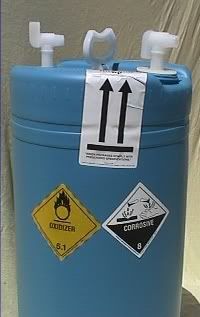
Firstly, 35% peroxide is caustic and should be treated with the same caution as a strong acid. 35% strength hydrogen peroxide should be readily available at any quality hydroponics supply shop. The stronger concentrations do not use the added stabilizers.

The recommended dosage is to add 2-3 ml to each gallon of water, however, I use 5 ml per gallon and have never had any problems. At every nutrient change treat your fresh water with hydrogen peroxide. The general idea is to let the hydroponics sytem circulate the hydrogen peroxide solution for about a half hour to let the peroxide work against pathogens and to let the solution stabilize before adding your nutrients.

The beneficial effects of using hydrogen peroxide last about 4 days. There are some gardeners who add a little peroxide to their nutrient reservoirs every 5 days in between nutrient changes. If you decide to do this, stick to the guidelines and always make sure your solution is thoroughly mixed before exposing your plants roots to it. Another option is to top off your nutrient reservoir with peroxide treated water whenever it is low.

By Jason Willkomm

Saturday, June 09, 2007

Easiest Hydroponics Feeding Plan

There are many things that can complicate feeding your plants hydroponically. It can be hard enough trying to feed the right strength and right ratios of N-P-K, let alone trying to figure out trace nutrients and secondary nutrients. Once you get past these basics, you must consider plant vitamins, hormones, and keeping everything at the right Ph. If you are just starting out and you only have 20 bucks in your pocket and a teaspoon, this is written for you. I recommend you eventually get a ph meter and a TDS (or EC) meter if you are serious.


Website Promotion Service

The first ten days your plants have roots, feed them 400 ppm Maxsea 3-20-20. This is about 1 level teaspoon/gallon of tap water. Add to this 1/4 teaspoon epsom salts for magnesium.
After that, feed them 600 ppm Maxsea 16-16-16. This is about 1 rounded teaspoon. To each gallon add 1/4 teaspoon epsom salts.

When you are finished with vegatative growth and begin flowering, feed your garden a rounded 1/2 tsp Maxsea 16-16-16 plus a rounded 1/2 tsp Maxsea 3-20-20 in each gallon of water. Be especially sure to add 1/4 tsp epsom salts to each gallon through the flowering stage. I used to switch to straight Maxsea 3-20-20 at this point, but most plants look a little nitrogen deficient by the end. Feed your garden in this way for two weeks, while the plants transition from vegatative growth to flowering.

After the transitioning period, feed your garden 800 ppm Maxsea 3-20-20 until you near the end of flowering. This is about 2 level teaspoons per gallon. Make sure to add 1/4 tsp epsom salts to each gallon. The very last 10 to 14 days before you harvest, you will want to feed your garden only plain water. Flushing you garden will remove excess nutrient salts from the plant tissue and will improve the aroma and flavor of your garden produce.

Seaweed additives are a popular choice when it comes to trace nutrients and plant hormone supplements. Since Maxsea fertalizers are seaweed based fertalizers, these benefits are built in and no additional supplements are required for these two things.

When you mix up Maxsea in a nutrient solution, it is a nearly perfect Ph. What's more, the Ph is stable in solution for many days. This is great for the beginning hydroponics gardener. This means you can get away without the initial cost of an expensive Ph meter in the beginning.
By carefully measuring the fertalizer when you mix up the nutrient solution, you can get away without the initial cost of an expensive TDS meter or EC meter as well. The best advice here would be to always top off your nutrient reservoir with 1/2 strength solution whenever it is a little low. Every two weeks, start over with fresh water and nutrients to avoid a nutrient imbalance in your solution.

The completeness of Maxsea offers you a very simple feeding plan. Between the two formulas (16-16-16 and 3-20-20) it is easy to provide a good balance of N-P-K for any stage of growth. Even so, if you carefully read the fertalizer ingredients, you will find Maxsea is missing one thing... magnesium. By adding 1/4 teaspoon epsom salts/gallon, you inexpensively avoid having any problems with a magnesium deficiency.

Finally, Maxsea costs considerably less than high quality professional hydroponics fertalizers, and will give you excellent results just the same. This is especially true when you begin buying the different hydroponic fertalizer parts, and the separate plant hormone additives, and the Ph meter and TDS meter to properly maintain the solutions. So, for a simpler way that also saves you money, keep this page mind.

By Jason Willkomm

Friday, June 08, 2007

Commercial Uses for the Hydroponic Method

The process of hydroponic gardening is becoming more and morewidely accepted. It started as an experiment over 100 years ago,and has evolved into another growing method for the production ofcommercial crops.

The reason why hydroponic growing is used in commercial cropfarming is because those who use this method can harvest a largeamount of crops in less space. Plants can be grown closer togetherusing this system and different types of plants can be grown in thesame hydroponic growth system.


Website Promotion Service

One other advantage of using the hydroponic growth method is thatit enables farmers to grow crops that are more organicallyproduced. (There is a standard for a produce to be consideredorganically grown and you can check out this information at theUSDA website). Furthermore, the growing season is year round formost hydroponic-grown plants, especially when the correct lightsource is used for each plant.

The correct type of lighting that you would need for growing plantsindoors using the hydronponic method would be a High IntensityDischarge (H.I.D.) light. These types of lights are designed togive off the correct spectrum of light waves, which will allowplants to grow using this alternative growing system.

Besides using the right light source, a basic hydronponic growingsystem requires a variety of other components. For example,hydroponic-grown plants are held upright by wire supports or arerooted in substances such as sand or gravel. The type of hydroponicgrowth system that you choose to build largely depends upon personpreference, and the expected result of producing plants in this way.

Other information that can help you out regarding the use of thehydroponic growing method is that related to the different types ofhydroponic growth systems. For example, you can either choose tobuild an active hydroponic system, or you can choose to construct apassive hydroponic system.

The active hydroponic systems use pumps and times, as well as otherelectronic devices. These devices help operate the entirehydroponic growing system. Passive systems sometimes use someelectronic gadgets, but they do not use pumps, and also use awicking agent to send nutrients to plant roots.

One major advantage of using a media-based hydroponic system isthat this type of growing system holds water that the plants canuse between watering cycles. This can help a plant survive in theevent of an emergency water shortage or power outage. Thedisadvantage, of course, is that it is messier, and costlier. Itrequires quite a bit more materials than do the water-based (waterculture) systems.

The major advantage of using a water culture system as opposed to amedia-based hydroponic system is that it costs less. Not only isthat, but the amount of waste disposal involved in using this typeof system substantially decreased as well. Furthermore, thesesystems are more compact and lightweight than the media-basedsystem, and can produce a harvest in an incredibly small space.

The major disadvantage of using a water-based system is that it theroots of plants to be constantly replenished with nutrients andwater so they do not dry out. Furthermore, the flow of nutrientscould be interrupted in the case of a power outage.

Commercial crop producers have quite a bit to consider when theydecide to use the hydroponic growing method. However, this methodhas been proven successful in a variety of cases. Crops that havebeen grown commercially using the hydroponic method includelettuce, strawberries, cut flowers, cucumbers, herbs, Pak Choi (aChinese plant), as well as medicinal plants, and planted from whichessential oils are extracted.

One source indicates an increased production in recent years forthe salad crops, cut flowers, and herbs. Many restaurants arefinding that purchasing hydroponic grown plants is beneficial tothem, because in the long run this growth process costs less thantraditional soil growing.

The up-front cost for preparing to use the hydroponic growth methodis very costly, however. In order to make sure you producesuccessful hydroponic-grown plants you will need to either investin all the right materials, or you need to know how to improvise tohelp bring the initial cost of this growing method down.

Another way to put it is that the cost of hydroponic growing costsmore, but commercial growers also usually experience higher levelsof crop production, and in the end often less space is needed andused. This type of crop farming is becoming more and more acceptedas a way to grow crops, and is used in many places of the world.

For more information check out the whole package at

Thursday, June 07, 2007

Easiest Homemade Hydroponics System

Not every type of hydroponics system lends itself well to homemade design. For systems that use drip or spray heads, you have many costly items to purchase before you can produce a properly working system. Usually, you end up learning a lot from your first failed attemp if you choose to build your own drip system or aeroponics system. There is one easy and relatively inexpensive homemade hydroponics system I have found. It is the homemade ebb and flow.
For a homemade hydroponics ebb and flow system, you will need two cheap plastic storage totes, an aquarium air pump, an aquarium water pump, a timer, a set of flood and drain fittings, and a short length of plastic tubing. If you are not sure what flood and drain fittings are, go to Google, click on "images", and do a quick search for "flood and drain fittings".


Website Promotion Service

First, one tote will be your nutrient reservoir. Pick a dark color tote to keep light out of the nutrient solution...this will help prevent the growth of algae. The air pump should go to a couple of air stones, which will be kept bubbling in the nutrient reservoir. The water pump goes here as well. Your water pump should be able to move at least 100 gallons/hour at a height of 3 feet. The pump should cost you about 30 dollars.

The other tote will go on top of the nutrient reservoir and hold the plant containers. Plant containers should be filled with expanded clay pellets or something equal, like lecca stone or lava chips. Somewhere in the bottom of this container (out of the way of the plants) you will drill two 3/4 inch holes and install the flood and drain fitting in one, and the overflow fitting in the other. Finish it off by running a short piece of tubing from the water pump to the flood and drain fitting (which is the shorter of the two).

All you have left to do is plug the water pump into the timer, set your timer for your flood and drain cycle, and fill the nutrient reservoir with ten gallons of solution. Flood your plant container for a 1/2 hour 4 times a day while the lights are on.

When the pump kicks on, the top container will fill with water (but never higher than the overflow). It takes a while for the clay pellets to really absorb the nutrient solution. When the pump kicks off, the nutrient solution will drain back down the shorter fitting, leaving the plant roots and the clay pellets wet with nutrient solution.

The flood and drain system is the homemade hydroponics system I use most often. The function of the system is simple. The results are consistently very good. The system is so easy to put together.

Before you get started...your systme is only one piece of the indoor gardening puzzle. You must have control over the environment you place your garden into, and this environment must be to the plants liking. In addition, you will have a much better chance at success once you learn the exact nutrient requirements (and therefore the exact feeding) of your plants at every stage of their development. In order to meet these feeding requirements, you must learn how to properly maintain nutrient sollution in a reservoir. Learn these things and you are sure to have a hydro-greenthumb.

For complete info on the different hydroponics systems and to learn how to properly maintain your nutrient solution, check out

By Jason Willkomm

Wednesday, June 06, 2007

Germinating Seeds Hydroponically

Germinating seeds hydroponically has several advantages over using soil. Many common diseases can be avoided because the hydroponic medium is clean while soil may contain fungus or insects that can harm vulnerable seedlings. Root rot can also be avoided by using a good hydroponic growing system.

The area where hydroponic growing really shines over using soil is control of the growing environment. With hydroponics, the gardener is no longer at the mercy of the soil's nutrient or water content. Every aspect of the plant's growing conditions can be controlled by the grower, not Mother Nature. This can be a tremendous advantage for young seedlings because they will get the proper nutrients right from the start of their life, leading to much healthier plants in the long run.


Website Promotion Service

Choosing a Growing Medium for Germinating Seeds

While germinating, seeds require both oxygen and water to sprout. This means that your growing medium must provide sufficient amounts of both to the seed or it will not germinate. Porous mediums such as perlite, rockwool, or vermiculite will do this along with having great drainage capabilities. Rockwool cubes can be used for quick set up and easy transplanting as the seeds sprout and grow into full-size plants. Simply place a larger cube around the cube holding the plant. The roots will expand and grow through both rockwool cubes, allowing your medium to easily adapt to the size of your plant.

Perlite makes another good growing medium for germinating seeds because its porosity allows for good drainage and oxygen availability. Just be sure to use the gardening-grade perlite rocks and not the finer grade masonry-quality powder. Plant your seeds about a half to one full inch deep in the perlite medium and cover them with a thin layer of perlite. The easiest way to set up a seedling tray with perlite is to use a plastic tub or similar container covered in black plastic to ensure that no light will penetrate to the roots of your plants. Add a drain hole about an inch from the container's bottom to cycle your nutrient solution through while keeping a minimum level of solution available to the plants at all times.

Nutrients for Germinating Seeds

Many seeds contain nutrients within their shell to provide initial nourishment to jumpstart the germination process. However, this is not true for all species. Orchid seeds, for example, contain very little nutrients, so be sure to research your particular plant before setting up your garden. To avoid stressing the seed at a vulnerable point, it is best to use a medium that is pre-prepared with a low concentration of nutrients. The first few initial waterings will give your seeds a small dose of nutrients until it is ready to absorb more. After a few days, switch to a regular nutrient solution in your water, but keep it at a lower dose than normal until the seed shows significant growth. Once the plants have developed strong, healthy stalks, you can change them over to your normal feeding and watering program and use your seedling tray for the next batch of germinating seeds.

By Katherine Keleher

Tuesday, June 05, 2007

Organic Hydroponics - Simplified

These days, it's easy to get lost in the wealth of knowledge available on hydroponics cultivation. The dizzying collection of fertilizers, additives and supplement doesn't necessarily help the situation. From foliage to root, there's something for everyone and for every kind of situation.


Website Promotion Service

But is all this necessary to grow great crops? I think one may find that great results can be achieved through simplicity. Here I will show you how to reduce the stock pile of fertilizers and supplements to the bare "essentials," while incorporating other products on an "only-as-needed" basis.

Growing plants organicallyPlants require nutrients just like humans. There are three groups of nutrients that plant require to grow into healthy, vigorous plants: Primary, Secondary & Micro Nutrients (see: Plant Nutrient - Primary, secondary & micro nutrients). Organic applications require a bio-stimulant to increase fertilizer uptake. Bio-stimulants often contain humic acid, fulvic acid, trichoderma, and a host of good microbes and bacteria that promote growth.

The nutritional requirement, however, is only a "single" component in growing healthy plants organically. Other aspect of organic hydroponics cultivation such as lighting, temperature, humidity, media et, all play a vital role in the plant's overall health.

Anything else, such as growth supplements and other additives should only be applied if there's a deficiency or other problems to plants where those substance could resolve the situation. Never add a substance to your nutrient solution simply because you think "the more you put in, the more you'll get out."

Additionally, some primary fertilizers may contain trace elements and you may not need to purchase a separate supplement of "micro nutrient." The micro nutrients are only required in trace amounts.

By Kirk Gordon

Monday, June 04, 2007

Introduction to Aquaponics

Hydroponics and aquaponics are very similar in every way except hydroponics requires the addition of fertilizer and there’s no fish in the nutrient solution.

In aquaponics, plants and fish live a symbiotic life with the fish feeding the plants, and the plants cleaning and filtering the fish’s environment.


Website Promotion Service

The fish waste becomes the plant’s food source, consequently, the plants’ roots filter the water and keep the tank clean. In essence, aquaponics could be considered a miniature ecosystem because both plants and fish are thriving in the same environment.

Aquaponics offer benefits to both Gardener’s and Fish Farmers. Fish Farmers may utilize aquaponics if they have difficulty disposing the nutrient rich fish water, while hydroponics growers benefit from having a constant supply of free plant food – eliminating the need to purchase commercial fertilizers.

Unlike hydroponics or aeroponics, aquaponics is still a relatively new cultivation technique. As more technology is developed and the process is refined, it could potentially become a space and money saving process for producing fish, vegetables and herbs.

In hydroponics and aeroponics applications, the nutrient solution needs to be prepared – measured, mixed, and then added to the reservoir. In aquaponics, there’s no mixing fertilizer involved, making it a great way for beginners to cultivate plants. Only the fish needs to be fed.
The number of commercial applications utilizing aeroponics is still very limited. A number of universities globally are currently exploring the science of aquaponics to advance this extreme cultivation technique. Aquaponics is currently being used in areas where the fish population is declining and/or their food supply must be imported.

By Kirk Gordon

Sunday, June 03, 2007

Germinating Seeds - The Hydroponic Way

Hydroponics is the practice of growing plants in water withoutsoil, and with the proper nutrients added. Nowadays, many homegardeners and farmers use this growing technique.

One very important process of plant growing, whether indoors oroutdoors is germination. You can help make sure that your plantsgerminate properly by following some special instructions that canhelp you.


Website Promotion Service

More specific instructions are available when you talk directly tohorticulturalists or gardening experts who understand the processof hydroponics. However, these basic tips can help get you started.In order to germinate the hydroponic way you need to keep in mindsome growing tips, such as the ones listed below:

  • Plant your seeds a month early indoors. You can put them underwhat is normally called a "grow light" or a "plant light." This istypically done a month earlier than the expected growing season fora given plant.
  • Know the specifics of germinating a particular plant seed. Keepin mind that when you attempt to help the germination process of aspecific plant seed that each seed has different growingrequirements. For instance, the temperature range that certainseeds will thrive in differs depending upon what that type of seedis. Furthermore, some seeds require more light then others. Therefore, you need to learn what the growing requirements are fora specific seed before you can begin the process of germinatingthat seed.
  • Use seeds (or bulbs) that are not in the dormancy period. Youwill need to keep in mind that many seeds will not grow duringcertain times. You need to choose seeds to plant while they are inthe active stage and not in the dormant stage.
  • Learn to recognize a true plant leaf. The first two sprouts thatemerge from many seeds may look like leaves, but they are reallythe seed leaves (called cotyledons) and not true plant leaves. These leaves are necessary for the early growth and development ofa young plant, but the true plant seeds have yet to come. When yousee these sprouts, however, you know that your plant is growingsuccessfully so far.
  • Know when to transplant if planting outdoors. Usually seeds thatare germinated are transplanted a month before transplanting intosoil. However, a true hydroponic growing process does not involvethe media of soil at all. Either way, this process can help youproduce better plants and crops.

If you are attempting to germinate your seeds for the use ofgrowing in a hydroponic style garden, you will not use soil at all.Instead, you will use a different media. Some of the types ofgrowing aids used for hydroponic growing include composted bark,expanded clay, gravel, oasis (artificial foam-based material,commonly used for floral arrangements), peat moss, and othermaterials.

These different types of materials used can be researched and used,and you can experiment with quite a few different growing media tofind what works best for you. Some types of hydroponic systemsrequire no media, which divides hydroponic systems into twodifferent groups-media-based hydroponic systems and water culturehydroponic systems.

Other characteristics of hydroponic systems are that some areactive systems while others are passive systems. For example, theactive systems use pumps and timers, and other electronic devices.These devices assist in running the entire hydroponic growingsystem. Passive systems sometimes use some gadgets, but they do notuse pumps, and also use a wicking agent to send nutrients to plantroots.

One major advantage of using a media-based hydroponic system isthat this type of growing system holds water that the plant can usebetween watering cycles. This can help a plant survive in the eventof an emergency water shortage or power outage. The disadvantage,of course, is that it is messier, and costlier. It requires quite abit more materials than do the water-based (water culture) systems.

The major advantage of using a water culture system as opposed to amedia-based hydroponic system is that it costs less. Not only that,but also the amount of waste disposal involved in utilizing thistype of system is dramatically decreased as well. Furthermore,these systems are more compact and lightweight than the media-basedsystem, and can produce a harvest in an incredibly small space.

The major disadvantage of using a water-base system is that itrequires a constant replenishment of water so that the plant rootsdo not dry out. Furthermore, the flow of nutrients could beinterrupted in the case of a power outage.

You can learn more about the germinating process and the hydroponicprocess of growing plants. More information such as what isprovided in this article is at your disposal, and most of it isoffered free of charge.

For more information check out the whole package at homemade-hydroponics.com

Homemade Hydroponics System Plan

Building your own water works system is quite simple and can be fun, if you know how to follow instructions. This particular type of system is best suited for water loving plants such as lettuce.


Website Promotion Service

Only a few items are required to get you up and running in no time. The things you will need to build a water works hydroponics system are listed below.

Required items
1. External pump
2. Air line/tubing
3. Air stones
4. Water proof bin, bucket, fish tank to use as a reservoir
5. StyroFoam
6. Mesh Pots
7. Growing medium - Rockwool, Grow rocks, et
8. Hydroponics nutrients - (Grow formula, Bloom formula, Supplements, Ph)

Required tools
1. Black spray paint, paint - * Only required if reservoir is transparent
2. Sharp object - Knife, box cutter, scissors (This is not a task for minors - Get help from an adult)

Getting started
1. Find a container to use as a reservoir such as a fish tank or a bin/bucket of some sort. The reservoir should be painted black if it is not light proof. Allowing light to enter the reservoir will promote the growth of algae. It is a good idea to use a reservoir that is the same dimensions (length x width) from top to bottom (Example: Top: 36"x20" Bottom: 36"x20").

If possible, use a fish tank or similar container as your reservoir. Spray paint tank (if translucent) to black and let dry. Using se a knife or sharp object, score a line on the tank (scratch off some paint in a straight line from top to bottom) which will be your water level meter (Allow you to see how much water is in reservoir). Creating this line, however, is not necessary as you can determine how much water is in the reservoir simply by see how far down the floater (StyroFoam) has sunk. Adding the line gives a more accurate and convenient view of the nutrient solution level.

2. Use a tape measure to get the length and width of your reservoir. Measure from inside of the reservoir from one end to the other. Once you have the dimensions, cut the StyroFoam 1/4" (inch) smaller than the size of the reservoir. For example, if your dimensions are 36" in length and 20" in width you should cut the StyroFoam to 35 3/4" x 19 3/4". The StyroFoam should fix nicely, with just enough room to adjust to water level changes.

lf the reservoir tapers off at the bottom (the bottom is smaller in dimension than the top) the floater (StyroFoam) should be 2"-4" smaller than the reservoir, or more if necessary.

3. Do not place StyroFoam in reservoir yet! First, you need to cut the holes for the net pots. Put the net pots on the StyroFoam where you want to place each plant. Using a pen or pencil, trace around the bottom of the net pots. Use a sharp tool such as a knife or box cutter to follow the trace lines and cut the holes for pots. (KIDS!!! Get help from an adult). On one end of the StyroFoam (any end), cut a small hole for the air line to run into the reservoir.

4. The amount of plants you can grow will depend on the size of the garden you build and the types of crops you grow. Remember to space plants appropriately so the each receive ample amounts of light.

5. The pump you choose must be strong enough to provide enough oxygen to sustain plants. Ask for a help choosing a pump at your local hydroponics supply store. Telling them the size of your reservoir (In gallons - 2, 5, 10 gallons, et) and they should be able to make a recommendation.

Connect the air line to the pump and attach the air stone to the free end. The air line should be long enough to travel from the pump into the bottom of the reservoir or at least float in the middle some where so the oxygen bubbles can get to the roots. It also must be the right size for the pump you choose. Most pumps will come with the correct size air line. To make your best guest, use a one gallon bucked/bottle or any container that you know the capacity and fill the reservoir. Remember to count how much it takes to fill the reservoir and you will know the capacity of your reservoir.

Setting it up
a. Fill reservoir with nutrient solution
b. Place the StyroFoam in tank
c. Run the air line through the designated hole/notch.
d. Fill the net pots with growing medium and place one plant in each pot.
e. Put the net pots into the designated holes in StyroFoam.
f. Turn on/plug-in pump and start growing with your fully functional, homemade hydroponics system.

Artifical lighting
If your hydroponics system is for indoor use, you will need to provide artificial lighting for plants to thrive. The size of your garden will determine how much light fixtures and watts you will need for proper coverage. Lighting stores can provide more information on selecting lights. When plants are in growth phase, they benefit more from HID (High Intensity Discharge) lamps. In Bloom, HPS (High Pressure Sodium) increases yield and grow denser, heavier flowers.

Fluorescent light is also an option. However, fluorescent lamps does not offer the same amount of lumens as HID's or HPS lamps. Fluorescent are good for starters and seedlings and for growers with ventilation problems. Fluorescent also burns much cooler than HID's and HPS lamps allowing you to place plants closer to the light source without burning tender foliage.

Footnotes:
A homemade hydroponics system like this is not ideal for a large scale production or commercial usage. This particular system plan does not offer a way to conveniently change nutrient solution. An extra container would be required to hold the floater while you change the solution.

By Kirk_Gordoj

Saturday, June 02, 2007

Want a Garden, But Don't have Enough Dirt Or Space? Hydroponics Gardening Is The Answer!

Hydroponics gardening is the perfect solution for anybody who wants a garden, but does not have enough space or dirt. Hydroponics gardening is, simply put, a method of growing plants using a nutrient solution instead of dirt. With hydroponics gardening, you are able to grow beautiful flowers and delicious vegetables virtually anywhere you want.

In addition, hydroponics gardening requires much less maintenance than a normal garden would. In fact, you will usually spend less than five minutes a day maintaining your hydroponics garden. Every few weeks the nutrient solution will have to be replaced, but that too will only take a few minutes. While some heavy fruiting vegetables like tomatoes and peppers may not be able to thrive in the nutrient solution, almost all other types of flowers and vegetables will just fine in a hydroponics garden.

Tips for the person new to Hydroponics Gardening.
While hydroponics gardening might seem difficult to a person doing it for the first time, you will be able to quickly get the hang of it. Just like you need gardening supplies for a regular garden, you will need hydroponics gardening supplies for hydroponics gardening.

The most common method of hydroponics gardening is the passive system. In the passive system, plants will sit directly in the nutrient solution. Because the solution might cause the plants to rot if not oxygenated, all passive systems come with an aquarium air bubbler, which will oxygenate the nutrient solution. If you find the hydroponics gardening method that is right for you, you will soon be enjoying all the gardening hydroponics vegetables, flowers and fruit that you could possible want.

By Mike Yeager

Friday, June 01, 2007

Tips on Making your Own Hydroponics System

If you're going to build a hydroponics system, it's best to begin with a container to use as a reservoir. For homemade systems, it's best to use a fish tank or a similar object. Once you find a suitable reservoir, you must paint it black. The black pain will make your reservoir light proof, because if light enters the reservoir it will promote the growth of algae. It is also a good idea to score a line on your reservoir once it is painted( use a knife, and scratch off paint in a straight line from top to bottom), which allows you to monitor the amount of water in your reservoir. Some people may not have to score their reservoir if they use a floater (Styrofoam), which indicates the amount of water in the reservoir by sinking. However, the line will give a view of the nutrient solution level.

Styrofoam should be used in your homemade reservoir. Before installing the Styrofoam into your reservoir, you should use a tape measure to measure the reservoir, from inside of the reservoir from one end to the other. Once your reservoir is measured, cut the Styrofoam 1/4" smaller than the size of the reservoir. The Styrofoam should fit nicely into your reservoir, and have enough room to adjust to changing water levels. Making your own hydroponics system also requires you use net pots, and you should cut holes in the Styrofoam for the placing of the net pots. A hole should also be cut into one end of the Styrofoam to allow for the airline to run into the reservoir.

When creating your own hydroponics system, it is also important to consider how many plants you want to grow. The amount of plants grown should depend on the size of the garden you build and the types of crops grown. Plants should also be space appropriately so each plant receives a generous amount of light. It’s also important to choose a strong pump for your hydroponics system. A strong pump should be able to provide enough oxygen to sustain plants. It’s best to employ the help of a professional when choosing a pump from a hydroponics supply store. Giving the professionals information about the size of your reservoir should make it easier for them to make a recommendation.

After installing a pump attach an airline to the pump and attaching an air stone to the other end of the line. It’s important to make sure your airline is long enough to travel from the pump into the bottom of the reservoir. If the airline is not this long, then it should float in the middle so oxygen bubbles can get to the roots. The line should also be the right size of the pump you choose, and most pumps come with the right size airline. It’s advisable to use a one-gallon bottle to fill your reservoir, which allows you to figure the capacity of your reservoir.

Lighting is very important if you’re building a hydroponics system indoors. If the system is inside, you’ll have to provide artificial lighting for your plants to thrive. The size of the garden will determine how many light fixtures and how many watts will be needed to provide proper light. It’s a good idea to visit a lighting store, where you will be able to receive more information on lights to use for your system. When plants are in growth phase, they will need high intensity discharge lamps. When plants are in bloom, high-pressure sodium lights increase yields and will grow denser and heavier flowers. Using fluorescent lighting is also an option, but fluorescent lights don’t offer the same amount of lumens as the others. Fluorescent lights are better suited for starters and seedlings and for growers with ventilation problems. Fluorescent also burns cooler than other lights, which allows you to place your plant closer to the light source without damaging them.

from : peterjonesweb.com

Hydroponics News


Free Blogger Templates by Isnaini Dot Com. Powered by Blogger