Find all type furniture from warehouse. If you want to change your bed or any table, find many Bedroom furniture and Dining room furniture. You can choose all furniture from the top manufacturer with the special offer price. You can also find bar furniture, such as bars, barstools, and pub tables in a variety of styles and colors for your room.
Anyway, if you want some special furniture that can convert and easy move for wearability, Convertible furniture may be best for you.
Wednesday, January 30, 2008
Furniture from warehouse
Labels: bar furniture, Bedroom furniture, Convertible furniture, Dining room furniture
Posted by Thanate 0 comments Links to this post
Wednesday, January 23, 2008
Plant grow chamber
Technically, grow chambers are not classified as a hydroponics growing technique. It's actually a housing or a container for the hydroponics system, accessories and lighting fixture.
Grow chambers are perfect for the home grower because the system is enclosed, putting everything in one container and out of view. Of course, keeping your grow space nice and neat is only one of the many benefits a grow chamber offers.
Some systems are approximately the size of a refrigerator allowing you to grow your plants in one side of the chamber and mother plant with clones in the other. Grow chambers varies in size. The Phototron, for example, is much smaller than the PowerGrow system. Phototron lights illuminate plants from the side because they are placed vertically in the cube. Placing light vertically illuminate the whole plant without lost of lumens on the lower section of plants.
Most systems are built with a reflective interior to efficiently distribute light and increase the amount of lumens reaching the plants, resulting in a higher yield. Some systems are build with Foylon reflective interior to maximize luminescence to 99% light reflectivity.
A Co2 tank may be added to increase Carbon dioxide. If you paid attention in biology, you should know that plants intake Co2 and release oxygen. The system usually comes with built in ventilation for removing stale air and prevent heat build up. Some systems use VHO (Very High Output) fluorescent bulbs which does not generate as much heat as HID's or HPS lamps, but still offer a high lumen output. Using cool burning lamps allow you to place the plants closer to the lights for maximum intensity without burning tender foliage.
Labels: grow chamber
Posted by Thanate 0 comments Links to this post
Monday, January 21, 2008
Professional lab coat
A lab coat or laboratory coat (white coat) is a knee-length overcoat/smock worn by professionals in the medical field or by those involved in laboratory work to protect their street clothes. The garment is made from white cotton or linen to allow it to be washed at high temperature and make it easy to see if it is clean.
Lab coat is sometimes used to denote the wearer. That is to say scientific personnel in a biotechnology or chemical company. In the same industry will also use Medical Scrubs. There are the shirts and trousers or gowns worn by surgeons, nurses, and other operating room personnel when "scrubbing in" for surgery. The wearing of scrubs has been extended outside of surgery in many hospitals. The well known uniform brand is Peaches. There are many styles for nursing uniforms, doctor's jacket, professional coat, etc. You can also find scrub tops, scrub pants by peaches scrubs.
Labels: Lab coat, Medical Scrubs, nursing uniforms, peaches scrubs
Posted by Thanate 0 comments Links to this post
Carbon dioxide fixation
Carbon dioxide fixation and water use efficiency are only now beginning to be understood in detail. When considering C02 fixation, plants are grouped into three main biological classifications - C3, C4 and CAM, abbreviated names for plants that share a predominance of the same chemical bonding sites (receptor sites) for carbon dioxide. Once the bonding process is complete, a series of chemical reactions occur to break down the C02 and water to create carbohydrates.
Photo: scrippsnews.ucsd.edu
To help understand the process more simply, plants absorb C02 using C3, C4 and CAM receptors, much like the body absorbs oxygen with haemoglobin, which has a high affinity for oxygen.
The difficulty facing researchers is that not all plants share the same receptor sites. It is known that C3 plants, of which some 95% or more of the biomass is comprised, utilise ambient C02 directly into their photosynthetic carbon reduction cycle. In terms of water utilisation, this is the least efficient category and includes plants such as cotton, rice, wheat and sugar-beets.
C4 plants, such as maize, sorghum, millet and sugarcane, have a higher water-use efficiency because an enzyme-based, C02-concentrating mechanism begins the photosynthetic process and allows higher stomatal resistance and less transpiration for the same C02 fixation.
by: Steven Carruthers
Labels: Carbon dioxide fixation
Posted by Thanate 0 comments Links to this post
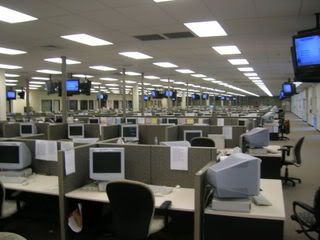
Call Center Service
Are you looking for your own call center service or Answering Services? A call center is a centralized office used for the purpose of receiving and transmitting a large volume of requests by telephone. There is operated by a company to administer incoming product support or information inquiries from consumers. Outgoing calls for telemarketing, clientele, and debt collections are also made. For your growing up business you should select the best Answering Service for take care your customers.
The best Answering Services should be complete with call center outsourcing services, which will manage your call volume, gather data, provide data and trend analysis and more. You may have a calls answered by a professional and courteous receptionist with your business name. With all time service, waiting for orders from your customers. The new callers get a better first impression. New callers will assume that you conduct business with the same professionalism that you answer their first call. They're judging you, so select your Answering Service.
Labels: Answering Service, call center service
Posted by Thanate 0 comments Links to this post
Choose your house plans
Do you want to build a new home in your land? If you have forest or hill area, the log home is the best choice for you, find Log Home Plans and choose a plan that you like. There are two kinds of log homes: "handcrafted" and "milled", made with a log house moulder. A handcrafted log home is typically made of logs that have been peeled but are otherwise essentially unchanged from their original natural appearance when they were trees.
A milled or machine-profiled log home is one constructed of logs that have run through a manufacturing process to remove natural features and imperfections of the log and convert them into timbers that are consistent in size and appearance.
Anyway, if you want to build a house at your farm or beach. You can also choose from Ranch house plans or bungalow house Plans as well. From houseplansandmore.com has the best homes all in one place, so finding the home of your dreams as a division of Home Design Alternatives, Inc. With a large variety of architectural designs.
Labels: bungalow house Plans, Log Home Plans, Ranch house plans
Posted by Thanate 0 comments Links to this post
Saturday, January 19, 2008
Straw Bale
Straw Bale Culture Technique
Growing plants in straw bales is not a common practice. Straw bale culture is a form of soilless cultivation or hydroponics. The technique is quite effective at growing healthy plants and can grow tomatoes, peppers or even cucumbers to list a few. Root vegetables like turnips or carrots are not ideal for straw culture. Certain herbs like cilantro, basil and parsley should do well when grown this way.
In general, plants grown in straw bales appear to require less water than when grown in soil. Another benefit to using straw bale culture is the garden bed will turn into compost offering some additional nutrients to your vegetables and herbs. The constantly composing environment warms up to provide gentle heat to the roots of plants and for your greenhouse. After some preparation and processing the compost will also begin to generate Co2 which will help to boost your plant?s growth rate.
Instructions:
Wheat straw bales are a good choice for cultivating plants. You should try to remove any seedlings of unwanted crops (weeds) that may sprout, then follow the instructions below to get started growing your vegetable crops "Straw Culture" style.
Construct Garden Area
The straws should be tied and in a vertical position. Build a (plastic) barrier/fence around your garden area to hold the bales in place. If you do build a barrier around your garden, make sure the bales are packed in well. The barrier should be made of plastic or other synthetic material and not consist of wood or other biodegradable substance.
Place a sheet of plastic on the bottom of your grow area to help the straw retain moisture. Tightly pack in the tied straw bales until the entire area of your garden is filled in. Soak the entire garden with water and place another sheet of plastic on top. Each bale will require approximately 1-gallon of water daily. For example, if you used 10 bales, you will need 10-gallons of water. Place another sheet of plastic on top of the bales after watering. The plastic should remain on between feedings until the processing period is over.
Preparing Bale (Processing)
The straw bale will require 3-4 weeks of processing before it is ready to grow plants. After the 3-4 weeks processing time, the bale will begin to decompose and form compost. This is when you will add fertilizers and top with a dressing of baggefrom d compost or manure about 4 inches high. Do not use soil.
Adding Fertilizer:
Once you?ve topped with compost/manure it?s time to add the fertilizer. Spread the dry (soluble) fertilizer over the surface of the bales and then water according to manufacturers directions. After you add fertilizer, the rate of bacterial action in the decomposing straw will increase, raising the bed's internal heat. Cover with plastic and let it sit for an additional week. After a week, the bales should be cool enough to start planting your seeds ? just drop em? in to sprout
from: hydroponicsearch.com
Labels: Culture Technique, Straw Bale
Posted by Thanate 0 comments Links to this post
Monday, January 14, 2008
Mass By Gas
by: Steven Carruthers
Carbon dioxide (C02) enrichment is one of the most interesting curiosities of modern horticulture, and is yielding valuable primary data as research continues into the effects of increased levels Of C02 in the atmosphere.
Unfortunately, the data collected is not generally published outside scientific journals, and seldom reaches the agricultural industry where the effects of increased levels Of C02 can be better understood.
During the past century, the level Of C02 in the atmosphere has been Dsteadily rising, largely from the combustion of fossil fuels. The atmospheric level Of C02 has climbed from an average of about 0.028% (280 ppm) in 1860 to 0.034% (340 ppm) by 1981, an increase of more than 1%. Current estimates predict that C02 levels will continue to rise, perhaps doubling within the next 70 years (Kellogg 1978).
While C02 in this context might be regarded as a pollutant by those concerned with the climatic implications of an increased "greenhouse effect", elevated levels Of C02 are likely to be beneficial to agriculture.
The genetic capability of plants to absorb higher levels Of C02 stems back to primordial times when plants adapted to C02 levels three to four times that which exists on earth today. In fact, for many years horticulturists have practised C02 enrichment in controlled environments to increase crop yields.
An important focus of current research is the exchange of carbon dioxide between the biosphere and the atmosphere, and the effects of elevated C02 levels upon plant species of economic value, in order to predict the likely outcome of future crop yields. On current projections, an increase in atmospheric C02 Will induce higher global crop yields. Kanemasu (1980) estimates that there will be a wheat yield increase in the United States of about 59% with C02 levels double that of today.
However, the implications for agricul-ture will depend strongly upon other weather-related factors, such as changes in rainfall patterns and the length of the growing season. Such predictions are also dependent upon:
1.The continued destruction of the great tropical and sub-tropical forests, since they act as the lungs of the planet for converting C02 into oxygen;
2.How much C02 is absorbed by the world's oceans, since they play a strong interactive role in both the global carbon cycle and the climate system; and
3.The continued burning of fossil fuels given likely alternative technologies of the future.
Tucker (1981) suggests that a doubling Of C02 could give an increase in photosynthesis of somewhere between 30% and 60%, but this may not necessarily be reflected in increased crop yields. He reasons that any increased yields are more likely to be attributed to increased precipitation, which in turn is attributed to global warming as a result of higher C02 levels.
Given a 30% increase in photosynthetic efficiency and a two-degree increase in average temperature, Baker and Lambert (1980) estimate a net increase in crop growth and development of 14% to 38%, depending upon the availability of water. Pimentel (1980) further notes that a decrease in rainfall of between 10% and 30% over the USA, together with a temperature variation of plus or minus two degrees, but with no change in ambient C02, will reduce expected wheat and corn yields by 10%-15%.
At present, these predictions are little more than conjecture owing to our inability to make accurate climate forecasts. However, there are a small number of scientists currently working to understand aspects of the biological consequences of elevated C02 in the future. Scientists can make much more progress in understanding the effects upon existing genotypes and the ensuing phenotypes. For example, yield responses can be studied for different crops, applying existing climate variations in order to estimate the future climate matrix, even if some of the more precise requirements concerning meteorological variables are the subject of conjecture.
Labels: Mass By Gas
Posted by Thanate 1 comments Links to this post
Playground Equipment
Does your garden have any playground equipment? Such as swing N gliders, tire swing, slides, pool accessory, swing sets, etc. I think these equipments are good for your children and make them happy. They can also exercise by playing in the garden as well.
From swingset.com offer safe playground equipment, daycare supplies, swings and swingsets and playground accessories. Especially a kid house from Playkids, that every piece of wood is hand crafted and sanded to eliminate all sharp edges. Find more information about playground equipment.
Labels: Playground Equipment, pool accessory, slides, swing N gliders, swing sets, tire swing
Posted by Thanate 0 comments Links to this post
Nutrient film technique
Nutrient film technique (NFT) hydroponic kits from American Hydroponics are complete and user-friendly, quality throughout. They are simple by design, easy to assemble and will give you many years of gardening enjoyment.
They work by trickling a slow moving film (stream) of oxygen rich nutrient solution down gently sloped, flat bottomed gullies (channels). Plants love it and thrive in this system. NFT Gully is the preferred growing method of commercial lettuce growers in Australia and New Zealand. These kits are built with the same quality components as the commercial installations also available from American Hydroponics.
NFT Gully Systems come in two sizes, 4 feet by 4 feet (122 x 122cm) and 4 feet by 6 feet (183 x 122cm) and are 24 inches (61cm) tall.
Each American Hydroponics NFT Gully System includes a galvanized steel table frame with strong injection-molded ABS plastic corners, pre-drilled growing gullies, seed starting cubes, UL listed submersible magnetic impellor pump, feed and drain plumbing manifolds, 4 month supply of nutrients, pH test kit and complete instructions.
from: homeharvest.com
Labels: Nutrient Film Technique
Posted by Thanate 0 comments Links to this post
Sunday, January 13, 2008
Homemade hydroponics
Homemade hydroponics wick system
Water works/wick hydroponics systems are probably the most basic form of hydroponics kits available. The way they function is fairly simple to understand. The roots of the plants are constantly submerged under water and a pump is used with an airstone to provide aeration.
Water works systems do not provide proper aeration of the roots. To allow roots to breath, a pump must be used, usually an external one connected to an air line running into the reservoir. At the other end of the tube is an airstone that gently diffuse oxygen into the reservoir tank.
Water works usually utilize grow rocks, rockwool or a combination of both mediums to grow plants and keep them up-right and sturdy. Water works can be classified as a wick system because wick strips are generally placed in the planters (net pots) to pull nutrient from the reservoir to feed the upper root system. When you submerge the planter into the reservoir, the wick strip will transport water from the reservoir to feed the part of the roots that is not submerged under water or the roots growing at the top level of the root system.
Water works hydroponics systems, such as, Emily's Garden kit is a good choice for beginners and hobby gardeners'. The system is easy to use and maintain. Simply fill the reservoir with nutrient solution, plug in pump and your all set. The only thing you need to do periodically is replenish the reservoir once the nutrient solution falls below the water lever indicator.
Water works hydroponics systems are not the most advanced, however, it will get the job done and the system is great for beginners and hobby Gardeners. Water works may cause root rot and other problems because the roots are in water for longer than they need to be and is not recommended for large or long term plants.
Submerging plant roots into water for a long period of time will usually kill the plant or slows growth. Air stones will aerate the roots, but some plants may still die because of soaking up too much water.
One of the few crops that would be "perfect" for water works hydroponics systems is lettuce. Lettuce is a crop that loves water and plenty of it. Lettuce growers should have great results using this hydroponics technique.
Labels: homemade hydroponic
Posted by Thanate 0 comments Links to this post
Saturday, January 12, 2008
Acrylic Aquariums
Do you have any space in your greenhouse? Decorate a corner for fish tank with acrylic aquariums. This fish tank is a beautiful aquarium that you can choose and find everything you need to create a custom aquarium.
Cylinder Aquaruims for best view
You can also buy accessories from a large selection of discount acrylic aquariums, filters, protein skimmers, chillers and more for all your aquarium needs. The acrylic is the better material for fish tanks which great viewing because they have rounded corners and do not have the silicone seams. Acrylic aquariums are more durable, weigh less and offer more light than traditional fish tanks.
Anyway, you can also choose custom acrylic aquariums for your dream fish tank. There are many shapes and size for your need and full accessories such as air Pumps, aquarium chillers, artificial corals, calcium reactors, cleaning equipment, filtration, fish feeders, lighting, wall aquariums, water pumps, etc. Find out all accessories for acrylic aquariums.
Labels: acrylic aquariums, fish tanks
Posted by Thanate 3 comments Links to this post
Debt Consolidation
Do you have any debt?
Debt Consolidation Loans are essentially loans which are used to consolidate all your debts into just one manageable low payment, helping you to pay off financial obligations faster and easier.
Debt consolidation counseling can help you can begin living the life you want to live without credit card debt, secured loans, and other types of revolving credit and you do not need good credit to obtain counseling or a debt consolidation. It's a great option if you are living from one paycheck to the next, or having a tough time paying your monthly credit obligations. If you are in any or all these situations, a debt consolidation program may be a great option for you to consider seriously.
There are many options available to people such as you who is considering debt consolidation loans and you will soon discover how simple it is to consolidate your debt into an easy to manage payment. They make this an easy process for you! All you have to do is complete our short consolidation request and your advisor will begins working with you to explore which options are best for your situation. Find the many options that available when you come to debt consolidation from no debt today.com
Labels: Debt, no debt today
Posted by Thanate 1 comments Links to this post
Bamboo with hydroponics
Bamboo hydroponics garden technique
Bamboo hydroponics cultivation technique was developed by an African man name Oliver Waziweyi, Manicaland provincial chairman of the Zimbabwe Farmers' Union Horticultural Commodity. The 50 year olds' invention was dubbed the "Poor Man's Garden."
Mr. Waziweyi's invention was quite simple to understand and develop, however, it solved a complex problem that his community faced. Certain regions of Africa and other parts of the world is not suitable for agricultural development for one reason or another (infertile soil, limited rain/water supply, et). The Poor Man's Garden would allow people living in areas unsuitable for agricultural development to cultivate plants in their region.
Mr. Waziweyi wisely thought of using bamboo as a growing container along with a soilless media to cultivate 10 strawberries, four peas, 10 spinach, six covo, one pineapple, six shallots, 10 carrots, four herbs, two cabbages, three lettuces and several flowers on a two tier system measuring one square meter.
Advantages of bamboo hydroponics gardening:
As simple as Mr. Waziweyi's invention was, it was an important invention that help his community to farm their land -- effectively, too. People who used to go hungry can now feed themselves and their family. Some of the great advantages Mr. Waziweyi's invention offers are:
- Soilless media can be used (perlite, rockwool, expanded clay pellets, egg shells, aggregate, crushed wood chips, coir, et.)
- Save land space
- Conserve water by limiting evaporation.
- Avoid using chemicals on soil borne pests (pesticides/insecticides, herbicides)
Labels: Bamboo, bamboo hydroponics
Posted by Thanate 0 comments Links to this post
Monday, January 07, 2008
How to save energy in the Greenhouse
Although it isn't desirable to make a greenhouse completely air-tight, there is still much you can do to help decrease your energy costs.
Probably the most effective technique would be to insulate the north wall of your greenhouse. Since little light will come from that quarter, you can insulate by using a 1 inch board of foil-covered polyurathane foam. This has the insulating qualities of 3 1/2 times the double inflated polythene walls which no doubt you already have. By themselves the double layers of plastic can save you over 40% heat loss as compared to a single layer.
With some crops you can reduce the temperature inside your growing area. A five per cent temperature decrease gives anywhere from 20-35% savings in heat required. But you can't do this unless you maintain good practice in plant cultivation. Now's the time also to check your thermostats. Those which don't work properly can rob your heating/cooling apparatus by decreasing the overall efficiency. Thermostats should be accurately calibrated at least once a year. And they should be placed where they can do the most good.
A thermostat should not be in line with air flow from fans or heaters. They should also be covered to keep the sun from having any effect. The best location for a thermostat is usually at plant level in the center of the greenhouse. A thermostat should not be attached to a wall. Finally, if you're using an aspirate thermostat (one which pulls air over the sensor), you should place it where the air will be pulled over the sensor and not blown upon it.
Horizontal air flow is also important. Especially after the ventilating fans have been turned off. In order to prevent air stratification, it's smart to place fans at various locations around the greenhouse. They should all blow together and form a circular air movement around the greenhouse interior. The fan velocity should be at least 40 feet per minute. You can check how the air is moving by placing strips of paper on 2 foot stakes at certain intervals. When all the strips are fluttering in the breeze, you know you have the proper air movement.
For a 30 x 100 ft house place two fans (each capable of moving 700 cu ft/minute), one on each side of the house about midway and next to a wall. Each fan should be blowing in the opposite direction from its companion. This air circulation will mix the air inside the house and cut down the incidence of disease. Ventilation fans should be attached to the leeward side of the house. In this way they can get help from the prevailing winds. You must place them where they won't interfere with nearby structures, particularly other greenhouses.
Weatherstripping around doors can be very important. A 1/2 inch crack can cost over $100 a year! A good guide is this: to replace any lost carbon dioxide, a one inch square opening for every 2000 BTUs your inside furnace puts out will be sufficient. Again, make certain all harmful fumes are properly exhausted to the outside. One more thing: you might consider other kinds of fuel. Wood is supposed to be the cheapest and most cost-effective. But a lot of growers say it's too much mess and too much work. If you're using wood to fire a hot water heating system, you could get a full payback on the system within two years.
Blanketing: How to save energy costs in a very simple way:
The environmental factors necessary for plant growth are: the air temperature, its humidity,it velocity, its gaseous percentages. In addition to these we have to consider the media: its temperature, its humidity, its gas percentages, its chemical balances. Finally, both visible and invisible radiation must be considered.
Blankets or "energy curtains" are a method for controlling radiation and energy gain or loss. Although white washes can be used on the outside roof of the greenhouse, it is better to use fabric shading inside the greenhouse in order to control the amount of shading. By using light meters you won't make the mistake of too much or too little shading. You must select you shading fabric with care as different fabrics respond with different results. The amount of radiation from the sun which reaches the plant will depend not only on the greenhouse cover but also on the type of shading you use. A proper fabric blanket can reduce heat needs at night by at least 50%.
You use shading during daylight to cut down on excess sunshine, depending on the crop you're growing. You also use it at night. especially during the winter months, to cut down on heat loss. In either case, your blanket will be a thin fabric which can be pulled out over polypropolyne monofilament line. You can pull either from side to side or from one end of the greenhouse to the other. The fabric must be the kind which will fold easily upon itself when not in use. It can then be packed against the eave on one side or at the north end if used lengthwise in the greenhouse. Your apparatus for this should be a system where the fabric can be pulled into a horizontal position above the crop - usually at the height of the eave (or gutter) of the house. You can either move the blanket by hand or have it automated.
What type of fabric should you use?
That depends upon the crop. Generally porous materials are best because water doesn't collect or condense on top and make the blanket difficult to handle. However, solid fabrics give more insulating qualities and thus save more energy. In most cases the fabric should be porous, strong, easy to handle, low in cost, capable of good insulation and high light reflection. Many growers settle for a white porous fabric which shades by 50%. They do this during the summer because it makes the greenhouse climate easier for workers to work in. By using blanketing in this manner, some of your fans can be reduced in size and number - by 25-35%. But if you select the fabric based only on summer readings, you will lose some energy savings later on. A certain compromise must be made between summer and winter shadings.
We have seen some growers who use shade cloth on the outside roof of the greenhouse. THIS PRACTICE IS NOT RECOMMENDED because the fabric will collect dirt and cut down on the amount of light being transmitted to the crop. Also the fabric will weather and wear out much faster. No doubt the rising cost of fabric will slow down and eliminate this practice. Vertical curtains can be used - especially at night and during the winter months. These curtains can be either porous or solid but solid will give more protection from heat loss. Since the curtain is vertical, you don't have to worry about condensation. The curtains are placed vertically right next to the crop. Some growers will even move the crop close together on wintry nights and "box in" the crop with vertical curtains on all four sides. Then they will use the overhead blanket to prevent upward radiation.
by: Bob Saffell
Labels: save energy in the Greenhouse
Posted by Thanate 0 comments Links to this post