There are no doubts about the benefits of using hydrogen peroxide properly in a hydroponics system. This becomes especially true if your nutrient reservoir is kept above 72 degrees. Warm water holds less dissolved oxygen, and therefore encourages the growth of more viruses, fungi, and anaerobic bacteria. Hydrogen peroxide adds oxygen to you water and cleans the water of pathanogens. Benefits include healthier root systems, increased nutrient uptake, thicker stems, and bigger leaves.
One expert claims it should be used on all soil gardens as well as in hydroponics sytems. Knowing as much as I do about beneficial fungus and micro-organisms and the benefits they provide to living plants, I am shy in taking this advice. However, when this first line of defense fails and plants become sick I often resort to using hydrogen peroxide treatments on my soil grown plants.
The chemical formula of hydrogen peroxide is H2O2. You may notice it is simply water with an extra oxygen atom. In fact, as hydrogen peroxide breaks down in a solution the result is oxygen and water. Its application helps deliver oxygen to over watered plant roots and helps to sterilize the growing media by killing harmful anaerobic (not oxygen compatible) bacteria and pathanogens that cause disease. This includes bacterial wilt, pythium fungi, fusarium fungi, and others.
I avoid using the common 3% hydrogen peroxide you normally find at drug stores. This is because such low percentage solutions are unstable, and chemicals are added to the peroxide to keep it from breaking down before it can be used. I did a little research because I did not know what chemicals were used for this, or if the plants uptake these chemicals, or if there was a health risk associated with any of these stabilizing chemicals.
Hydrogen peroxide is usually stabilized with acetanilide. Acetanilide is a synthetic compound that was first used for its fever reduction and pain killing properties in the late Nineteenth Century. For many years it was utilized as an alternative to aspirin to treat various ailments, but large-scale medical use stopped when the toxic side effects of consuming acetanilide became apparent. This was enough to make up my mind to use 35% hydrogen peroxide instead.
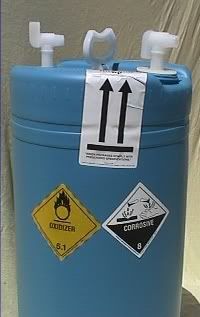
Firstly, 35% peroxide is caustic and should be treated with the same caution as a strong acid. 35% strength hydrogen peroxide should be readily available at any quality hydroponics supply shop. The stronger concentrations do not use the added stabilizers.
The recommended dosage is to add 2-3 ml to each gallon of water, however, I use 5 ml per gallon and have never had any problems. At every nutrient change treat your fresh water with hydrogen peroxide. The general idea is to let the hydroponics sytem circulate the hydrogen peroxide solution for about a half hour to let the peroxide work against pathogens and to let the solution stabilize before adding your nutrients.
The beneficial effects of using hydrogen peroxide last about 4 days. There are some gardeners who add a little peroxide to their nutrient reservoirs every 5 days in between nutrient changes. If you decide to do this, stick to the guidelines and always make sure your solution is thoroughly mixed before exposing your plants roots to it. Another option is to top off your nutrient reservoir with peroxide treated water whenever it is low.
By Jason Willkomm
One expert claims it should be used on all soil gardens as well as in hydroponics sytems. Knowing as much as I do about beneficial fungus and micro-organisms and the benefits they provide to living plants, I am shy in taking this advice. However, when this first line of defense fails and plants become sick I often resort to using hydrogen peroxide treatments on my soil grown plants.
The chemical formula of hydrogen peroxide is H2O2. You may notice it is simply water with an extra oxygen atom. In fact, as hydrogen peroxide breaks down in a solution the result is oxygen and water. Its application helps deliver oxygen to over watered plant roots and helps to sterilize the growing media by killing harmful anaerobic (not oxygen compatible) bacteria and pathanogens that cause disease. This includes bacterial wilt, pythium fungi, fusarium fungi, and others.
I avoid using the common 3% hydrogen peroxide you normally find at drug stores. This is because such low percentage solutions are unstable, and chemicals are added to the peroxide to keep it from breaking down before it can be used. I did a little research because I did not know what chemicals were used for this, or if the plants uptake these chemicals, or if there was a health risk associated with any of these stabilizing chemicals.
Hydrogen peroxide is usually stabilized with acetanilide. Acetanilide is a synthetic compound that was first used for its fever reduction and pain killing properties in the late Nineteenth Century. For many years it was utilized as an alternative to aspirin to treat various ailments, but large-scale medical use stopped when the toxic side effects of consuming acetanilide became apparent. This was enough to make up my mind to use 35% hydrogen peroxide instead.
Firstly, 35% peroxide is caustic and should be treated with the same caution as a strong acid. 35% strength hydrogen peroxide should be readily available at any quality hydroponics supply shop. The stronger concentrations do not use the added stabilizers.
The recommended dosage is to add 2-3 ml to each gallon of water, however, I use 5 ml per gallon and have never had any problems. At every nutrient change treat your fresh water with hydrogen peroxide. The general idea is to let the hydroponics sytem circulate the hydrogen peroxide solution for about a half hour to let the peroxide work against pathogens and to let the solution stabilize before adding your nutrients.
The beneficial effects of using hydrogen peroxide last about 4 days. There are some gardeners who add a little peroxide to their nutrient reservoirs every 5 days in between nutrient changes. If you decide to do this, stick to the guidelines and always make sure your solution is thoroughly mixed before exposing your plants roots to it. Another option is to top off your nutrient reservoir with peroxide treated water whenever it is low.
By Jason Willkomm