For saving space and soil, this method also has several
other benefits, including no soil-borne diseases, no
weeds to pull and no soil to till, run-of-the-mill side
benefits of soil-less gardening.

Hydroponic Gardening Article

Hydroponics is basically a Greek word which associates the method of growing plants using nutrient solutions, without soil is known as hydroponics. Hydro means water and pono means labor.

Gardening

Does thinking of food laced with toxic pesticides and synthetic compounds kill your appetite? That's what industrial food production has brought to our tables - food that is hampering our health and creating havoc with the environment.

Gardening by Greenhouse

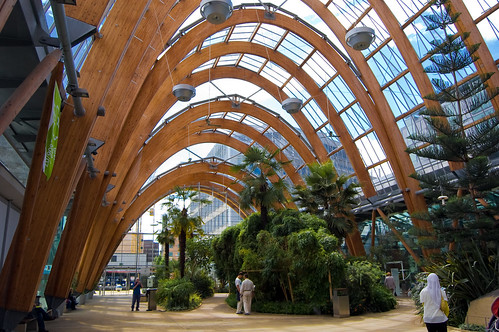
There are some plants that need extra heat, and the climate is just not right. For these occasions, greenhouse gardening is a great way to get what you need.

Flower Bulbs

Hydroponic is the technique of growing flowers, fruits or vegetables in a soilless environment. The practice originated from the Aztecs where they used rafts covered in soil from the lake bottom to plant vegetables

The Environmental

Apparently, we can see how nature is treated these days. It is a sad thing to know that people do not pay attention so much anymore to the environmental problems.

Showing posts sorted by relevance for query plant. Sort by date Show all posts

Plant Cloning

Plant cloning is not a new concept and basically the exact same thing only the cultivation of cloned plants is done using hydroponic cloning instead of the more traditional soil potting. If you have a tough time cloning, make certain you have the right hydroponic supplies, available. Detailed below are some essential supplies for cloning plants.

Vital Information for Plant Cloning
By Michael Straumietis

In hydroponics, plant cloning is the act of reproducing a plant asexually so that it is a genetic copy of the original. Many people choose to clone because it can actually create a new plant faster than seed propagation. Others choose to clone in order to make copies of genetically superior plants. It is not uncommon for an experienced hydroponic gardener to have his grow room be mostly filled with clones of a single original plant.


Hydroponics Guide
Photo: lau.edu.lb

In hydroponics, the most common method of plant cloning is making a cutting. This simply involves cutting off a part of the "parent plant" and planting it in the medium. Since each cell in a plant has the ability to grow every part necessary for the plant's survival, this will create an entirely new plant if done properly.

The plant you use to make your clone or clones must be chosen carefully. During a growing season, make sure to pay careful attention to which plants seem to be the hardiest, were most resistant to the diseases, and provided the biggest yields. In vegetables, try to note which offered the best tasting food. In flowers, look at which offered the biggest, most colorful and most fragrant buds. Make certain that the mother plant is healthy and well fed. Making a cutting creates an open wound which increases the odds of the plant suffering from a bacterial or viral disease.

You may have to alter your growing room conditions when plant cloning. Cuttings often require more humidity and higher temperatures in order to successfully take root. Make sure that the light you use is neither too harsh or too hot. It will probably benefit from either indirect, reflected light and cool running light source, such as LED or fluorescent bulbs.

To make the cut, take a sharp razor blade and sterilize it with isopropyl alcohol. Cut a section of the stem that is about two to five inches long. The stem should have a few large leaves on it to maximize photosynthesis.

However, you should remove any leaves that may wind up below the growing medium. These will simply die because they will not receive any light, and create unwanted organic material that might attract bugs and diseases.

To maximize the potential of success of the plant cloning, you should use a rooting hormone. Rooting hormones are designed to increase the percentage of cuttings which form roots, speed up how quickly roots form and increase the number of roots on every cutting. To use this, simply pour the hormone into a shot glass or other container and dip the end of the cutting into it.

Now you should poke an area in your medium to allow easy insertion of the cutting and gently place it in the medium. Some growers cover their grow tray or buckets with a clear plastic bag to increase humidity. The bag should be removed after about two weeks, when the roots should start taking hold.

During the cloning stage, growers should pay extra attention to any fungi that might form in their growing room. The increased need for humidity creates a perfect environment for many species of undesirable fungi to thrive.

Michael Straumietis is co-founder of Advanced Nutrients, an international marketer and manufacturer of agricultural, home & garden, hydroponics and soil less fertilizers and plant nutrients. To discover more about plant cloning, read our feature article in the hydroponics gardening section at http://www.advancednutrients.com/

Plant Enhancer In Hydroponics

There are a lot of hydroponic supplements available to growers today and all gardeners want to make sure that they spend their money only on the ones that truly give them the most benefit. The one of the best supplement you should know is plant enhancer;

The Benefits Of Using Plant Enhancer In Hydroponics
By Michael Straumietis

Hydroponics can be a very rewarding and often profitable enterprise. But it can also sometimes be a costly one. With all the lights, fixtures, media, and other materials to buy and maintain, many hydroponics growers often choose to not purchase a reputable plant enhancer, seeing it as an unnecessary expense. But for anyone who is truly serious about witnessing just how much and how quickly their plants can develop, a quality plant enhancer is an essential investment. Here are just a few ways that including a reputable plant enhancer to your hydroponics system can be a boon to your indoor gardening.


Hydroponics Guide
Photo: roatanisland.net

Bigger Yield - One of the biggest factors that influence yield is how many nutrients your plant is receiving. Increasing the amount of nutrients that your plants receive is not as simple as just increasing them in your nutrient solution, because nutrient uptake may hit a plateau if the conditions of your root zone are not optimized. A quality plant enhancer usually has several elements that help improve uptake and therefore increase your yield. For example, some plant enhancers might contain specially designed enzymes that can stimulate root growth, thus enabling your plant to soak up more moisture and nutrients. Others might have beneficial fungi that can break down the nutrients in your solution so they are more useful to your plants.

Bigger Buds and Vegetables - The added growth will affect every part of your plant, including exactly where you want it the most. That means bigger buds, and larger, tastier, and juicer vegetables come harvest time. In fact, many plant enhancers are engineered to give you exactly this result.

Faster Harvests - Because your plants will be healthier and receiving nutrients much more efficiently, they will be able to progress much through each stage of plant development. This means that you can enjoy your vegetables or flowers much more quickly.

Healthier Plants - Since soil contains most of the harmful bacteria that can make plants ill, plants grown hydroponically are usually healthier than those that are traditionally grown. But that does not mean that hydroponic plants are completely immune from the bacteria, viruses, and fungi that can ruin a crop. A quality plant enhancer can severely reduce the odds of a disastrous infection in a number of ways. First, when there are multiple strains of fungi or bacteria in your hydroponics system, they will all compete for nutrients. If beneficial fungi and bacteria become an established presence, it will become less likely that harmful fungi and bacteria will grow in your system because the nutrients that they organisms need to survive will be scarce. Second, these enhancers can actually improve the natural defenses of your plants against diseases.

Higher Cloning Success Rate - Cloning plants from a stem cutting is a very delicate procedure and often results in a significant percentage of cuttings dying before they can take root. When your cutting comes from a plant that has been made healthier due to the use of a plant enhancer, it is more likely to have sufficient storage of carbohydrates to make the cloning attempt a success.

Michael Straumietis is co-founder of Advanced Nutrients, an international marketer and manufacturer of agricultural, home & garden, hydroponics and soil less fertilizers and plant nutrients. If you would like to know more about plant enhancers, discover the Advanced Epedia at http://www.advancednutrients.com/

Nutrients For Hydroponics

A hydroponic nutrient solution contains all the elements that the plant normally would get from the soil. These nutrients can be purchased at a hydroponic supply store.

Plant Nutrients For Hydroponics
By Susan Slobac

Hydroponics is a method of indoor gardening that does not use soil as a growing medium for the plants. Plants can be grown in a water solution, or in other growing mediums such as rockwool or coir. This is an ideal method of growing plants where soil may be less than ideal for gardening, as well as places where there is no land available to garden, such as in urban areas in cities.


Hydroponics Guide
Photo: home.aone.net.au

All plants need three components in order to grow and thrive: water, light and food. Without any one of these, the plants will die. Food is vitally important to the plant, in order for it to grow and eventually reach maturity, where it will reproduce by flowering or fruiting. In terms of hydroponic gardening, food is a specialized component because of the soil-less growing factor.

How do hydroponic plants eat?

Plants grown hydroponically are fed using a hydroponic nutrient solution. In many hydroponic indoor gardening systems, the plant's roots are grown in water. The crown of the plant is suspended by many and various means above the water, allowing the roots to float in the fluid.
In some systems, the water in which the plant roots rest is aerated using a small pump, and this allows the nutrient to be pushed all around the plant roots, where the roots can then make contact with the plant nutrients and take them in. Plant nutrients for hydroponics can also be taken up by the plant through the use of a wick. This wick-based system requires no pump.
Not all hydroponic systems are water based, however. You can also grow your plants in some form of media, which could include peat moss, vermiculite, perlite, coir, rockwool, and others. The medium helps to keep the crown of the plant out of the water, yet it keeps the plant roots in contact with the hydroponic nutrients.

All plants, whether growing indoors or not, need several types of nutrients. The main plant nutrients for hydroponics are nitrogen, phosphorus and potassium. Plants also need macronutrients in greater amounts than micronutrients, but nevertheless all are needed in order for any plant to thrive.

In a traditional garden setting, your plants would be receiving nutrients from the soil, but without soil, plants are helpless without the gardener providing them with plant nutrients for hydroponics.

If you are growing food crops and wish to garden organically, not to worry: plant nutrients for hydroponics come in the form of organic gardening supplies suitable for fruits, leafy vegetables, melons, berries, grapes and many other types of food plants suited to hydroponic gardening.

Learn about plant nutrients for hydroponics as Susan Slobac describes the specialty requirements of indoor gardening with hydroponics.

Germinating Seeds - The Hydroponic Way

Hydroponics is the practice of growing plants in water withoutsoil, and with the proper nutrients added. Nowadays, many homegardeners and farmers use this growing technique.

One very important process of plant growing, whether indoors oroutdoors is germination. You can help make sure that your plantsgerminate properly by following some special instructions that canhelp you.


Website Promotion Service

More specific instructions are available when you talk directly tohorticulturalists or gardening experts who understand the processof hydroponics. However, these basic tips can help get you started.In order to germinate the hydroponic way you need to keep in mindsome growing tips, such as the ones listed below:
  • Plant your seeds a month early indoors. You can put them underwhat is normally called a "grow light" or a "plant light." This istypically done a month earlier than the expected growing season fora given plant.
  • Know the specifics of germinating a particular plant seed. Keepin mind that when you attempt to help the germination process of aspecific plant seed that each seed has different growingrequirements. For instance, the temperature range that certainseeds will thrive in differs depending upon what that type of seedis. Furthermore, some seeds require more light then others. Therefore, you need to learn what the growing requirements are fora specific seed before you can begin the process of germinatingthat seed.
  • Use seeds (or bulbs) that are not in the dormancy period. Youwill need to keep in mind that many seeds will not grow duringcertain times. You need to choose seeds to plant while they are inthe active stage and not in the dormant stage.
  • Learn to recognize a true plant leaf. The first two sprouts thatemerge from many seeds may look like leaves, but they are reallythe seed leaves (called cotyledons) and not true plant leaves. These leaves are necessary for the early growth and development ofa young plant, but the true plant seeds have yet to come. When yousee these sprouts, however, you know that your plant is growingsuccessfully so far.
  • Know when to transplant if planting outdoors. Usually seeds thatare germinated are transplanted a month before transplanting intosoil. However, a true hydroponic growing process does not involvethe media of soil at all. Either way, this process can help youproduce better plants and crops.

If you are attempting to germinate your seeds for the use ofgrowing in a hydroponic style garden, you will not use soil at all.Instead, you will use a different media. Some of the types ofgrowing aids used for hydroponic growing include composted bark,expanded clay, gravel, oasis (artificial foam-based material,commonly used for floral arrangements), peat moss, and othermaterials.

These different types of materials used can be researched and used,and you can experiment with quite a few different growing media tofind what works best for you. Some types of hydroponic systemsrequire no media, which divides hydroponic systems into twodifferent groups-media-based hydroponic systems and water culturehydroponic systems.

Other characteristics of hydroponic systems are that some areactive systems while others are passive systems. For example, theactive systems use pumps and timers, and other electronic devices.These devices assist in running the entire hydroponic growingsystem. Passive systems sometimes use some gadgets, but they do notuse pumps, and also use a wicking agent to send nutrients to plantroots.

One major advantage of using a media-based hydroponic system isthat this type of growing system holds water that the plant can usebetween watering cycles. This can help a plant survive in the eventof an emergency water shortage or power outage. The disadvantage,of course, is that it is messier, and costlier. It requires quite abit more materials than do the water-based (water culture) systems.

The major advantage of using a water culture system as opposed to amedia-based hydroponic system is that it costs less. Not only that,but also the amount of waste disposal involved in utilizing thistype of system is dramatically decreased as well. Furthermore,these systems are more compact and lightweight than the media-basedsystem, and can produce a harvest in an incredibly small space.

The major disadvantage of using a water-base system is that itrequires a constant replenishment of water so that the plant rootsdo not dry out. Furthermore, the flow of nutrients could beinterrupted in the case of a power outage.

You can learn more about the germinating process and the hydroponicprocess of growing plants. More information such as what isprovided in this article is at your disposal, and most of it isoffered free of charge.

For more information check out the whole package at homemade-hydroponics.com

Hydroponic Plant Systems - What, No Dirt?

Simply put, hydroponics is the growing of plants without soil. The word "hydroponics" comes from the Greek word hydro, which means "water" and ponos, which means "labor or water-working."

Typical Dirt Gardening:

All plant leaves need light, oxygen and carbon dioxide. Plant root systems require water, nutrients and oxygen. When plants are grown normally (in soil) water takes nutrients from the soil and carries them to the plant roots. The water and nutrients are taken up by the roots to feed plant growth. Soil drainage then allows water to be replaced by air in the gaps between soil grains. This supplies the roots with oxygen.

Hydroponic Gardening:

In hydroponic plant systems, you dissolve the nutrients in water. Soil is replaced with a "growing medium" - a soil substitute - that holds the roots and supplies them with water, nutrients and oxygen.

You can deliver the nutrient solution a couple of ways: You can drip feed it to each plant, or you can flood the root chamber, then drain it out. These methods require a pump and timer to circulate the nutrients through the roots. You can also grow the plant roots in the air by spraying them with a fine mist of nutrient solution, or grow them by aerating the solution under each root mass with an air pump.

Actually, six basic types of hydroponic systems make up the basis of all hydroponic gardening.

  • Wick
  • Water Culture
  • Ebb and Flow (or Flood & Drain)
  • Drip
  • Nutrient Film Technique (N.F.T)
  • Aeroponic
Let's take a look at these 6 basic hydroponic plant systems:


Wick

The wick system is the simplest and easiest to build of all the systems available. It is also passive, with no moving parts. It requires no electrical energy source or special attention.
The nutrient solution is drawn into the grow bed from the nutrient reservoir through the capillary action of wick material and absorbent grow media. When plants get very large, they may use nutrients faster than the wicks can supply them.

Water Culture

The water culture is another very simple hydroponic system. Plants grow with the roots suspended in the nutrient solution. The structure that holds the plants is usually made of styrofoam and floats directly on the nutrient solution. An air pump delivers the nutrient solution and oxygen to the plant roots. The main disadvantage of a water culture system is that it doesn't work well with large plants or with long-term plants.

Ebb and Flow (or Flood and Drain)

The ebb and flow hydroponic system works by temporarily flooding the grow tray with nutrient solution and then draining the solution back into a reservoir. Usually the pump is submerged and is connected to a timer.

The ebb and flow system can be used with a variety of growing media. The entire grow tray can be filled with grow rocks, gravel or granular rock wool. You can use individual pots filled with growing medium. This makes it easy to move plants around or even move them in or out of the system.

Drip Systems (Recovery and Non-Recovery)

Drip systems are probably the most widely used type of hydroponic plant system. Basically, a timer controlled pump delivers nutrient solution to drippers located at the base of each plant. In a Recovery Drip System the excess solution runs off and returns to the tank for re-use. A Non-Recovery System does not collect the run-off which therefore goes to waste.

Nutrient Film Technique - "N.F.T."

This is another very popular hydroponic system. A constant flow of nutrient solution pumped from a tank flows over the roots of the plants in a tube or tray and then returns to the tank. The growing medium is mostly air, plus whatever medium was used to grow the plant from a seed or cutting (usually rock wool or perlite.)

Aeroponic

The aeroponic system is probably the most high-tech type of hydroponic gardening. The growing medium is primarily air. The roots hang in the air and are misted every few minutes with nutrient solution. A timer controls the nutrient pump much like other types of hydroponic systems, except the aeroponic system needs a short cycle timer that runs the pump for a few seconds every couple of minutes.

Many growers prefer hydroponic plant systems and believe them to be a far more efficient way to provide water and nutrients to their plants. Since food and water go directly to the roots, the plant is able to spend more energy growing above the surface, producing more vegetation, larger fruit, flowers and vegetables.

By Robert Mosse

Hydroponic Plant Systems With No Soil

Simply put, hydroponics is the growing of plants without soil. The word "hydroponics" comes from the Greek word hydro, which means "water" and ponos, which means "labor or water-working."

Typical Soil Gardening

All plant leaves need light, oxygen and carbon dioxide. Plant root systems require water, nutrients and oxygen. When plants are grown normally in soil, water takes nutrients from the soil and carries them to the plant roots. The water and nutrients are taken up by the roots to feed plant growth. Soil drainage then allows water to be replaced by air in the gaps between soil grains. This supplies the roots with oxygen.

Hydroponic Gardening

In hydroponic plant systems, you dissolve the nutrients in water. Soil is replaced with a "growing medium" a soil substitute, that holds the roots and supplies them with water, nutrients and oxygen. You can deliver the nutrient solution a couple of ways. You can drip feed it to each plant, or you can flood the root chamber, then drain it out. These methods require a pump and timer to circulate the nutrients through the roots. You can also grow the plant roots in the air by spraying them with a fine mist of nutrient solution, or grow them by aerating the solution under each root mass with an air pump.

Actually, six basic types of hydroponic systems make up the basis of all hydroponic gardening.

1. Wick

The wick system is the simplest and easiest to build of all the systems available. It has no moving parts, and requires no electrical energy source or special attention.

The nutrient solution is drawn into the grow bed from the nutrient reservoir through the capillary action of wick material and absorbent grow media. When plants get very large, they may use nutrients faster than the wicks can supply them.

2. Water Culture

The water culture is another very simple hydroponic system. Plants grow with the roots suspended in the nutrient solution. The structure that holds the plants is usually made of styrofoam and floats directly on the nutrient solution. An air pump delivers the nutrient solution and oxygen to the plant roots. The main disadvantage of a water culture system is that it doesn't work well with large plants or with long-term plants.

3. Flood and Drain or Ebb and flow system

The ebb and flow hydroponic system works by temporarily flooding the grow tray with nutrient solution and then draining the solution back into a reservoir. Usually the pump is submerged and is connected to a timer.

The ebb and flow system can be used with a variety of growing media. The entire grow tray can be filled with grow rocks, gravel or granular rock wool. You can use individual pots filled with growing medium. This makes it easy to move plants around or even move them in or out of the system.

4. Recovery and Non-Recovery or Drip Systems

Drip systems are probably the most widely used type of hydroponic plant system. Basically, a timer controlled pump delivers nutrient solution to drippers located at the base of each plant. In a Recovery Drip System the excess solution runs off and returns to the tank for re-use. A Non-Recovery System does not collect the run-off which therefore goes to waste.

5. Nutrient Film Technique or "N.F.T."

This is another very popular hydroponic system. A constant flow of nutrient solution pumped from a tank flows over the roots of the plants in a tube or tray and then returns to the tank. The growing medium is mostly air, plus whatever medium was used to grow the plant from a seed or cutting.

6. Aeroponic

The aeroponic system is probably the most high-tech type of hydroponic gardening. The growing medium is primarily air. The roots hang in the air and are misted every few minutes with nutrient solution. A timer controls the nutrient pump much like other types of hydroponic systems, except the aeroponic system needs a short cycle timer that runs the pump for a few seconds every couple of minutes.

Many gardeners prefer hydroponic plant systems and believe them to be a far more efficient way to provide water and nutrients to their plants. Since food and water go directly to the roots, the plant is able to spend more energy growing above the surface, larger fruit, producing more vegetation, vegetables and flowers.

Starting With Planting Seeds

There is a great risk in seeds. Any reliable seed house can be depended upon for good seeds; but even so. A seed may to all appearances be all right and yet not have within it vitality enough, or power, to produce a hardy plant. If you save seed from your own plants you are able to choose carefully. Suppose you are saving seed of aster plants. What blossoms shall you decide upon? Now it is not the blossom only which you must consider, but the entire plant. Why? Because a weak, straggly plant may produce one fine blossom.

straggly plant
Photo: kerri.o

Looking at that one blossom so really beautiful you think of the numberless equally lovely plants you are going to have from the seeds. But just as likely as not the seeds will produce plants like the parent plant. So in seed selection the entire plant is to be considered. Is it sturdy, strong, well shaped and symmetrical; does it have a goodly number of fine blossoms? These are questions to ask in seed selection. If you should happen to have the opportunity to visit a seedsman's garden, you will see here and there a blossom with a string tied around it. These are blossoms chosen for seed.

If you look at the whole plant with care you will be able to see the points which the gardener held in mind when he did his work of selection. In seed selection size is another point to hold in mind. Now we know no way of telling anything about the plants from which this special collection of seeds came. So we must give our entire thought to the seeds themselves. It is quite evident that there is some choice; some are much larger than the others; some far plumper, too.

By all means choose the largest and fullest seed. The reason is this: When you break open a bean and this is very evident, too, in the peanut you see what appears to be a little plant. So it is. Under just the right conditions for development this 'little chap' grows into the bean plant you know so well. This little plant must depend for its early growth on the nourishment stored up in the two halves of the bean seed. For this purpose the food is stored. Beans are not full of food and goodness for you and me to eat, but for the little baby bean plant to feed upon.

plant seeds
Photo: Old Shoe Woman

And so if we choose a large seed, we have chosen a greater amount of food for the plantlet. This little plantlet feeds upon this stored food until its roots are prepared to do their work. So if the seed is small and thin, the first food supply insufficient, there is a possibility of losing the little plant. You may care to know the name of this pantry of food. It is called a cotyledon if there is but one portion, cotyledons if two. Thus we are aided in the classification of plants.

A few plants that bear cones like the pines have several cotyledons. But most plants have either one or two cotyledons. From large seeds come the strongest plantlets. That is the reason why it is better and safer to choose the large seed. It is the same case exactly as that of weak children. There is often another trouble in seeds that we buy. The trouble is impurity. Seeds are sometimes mixed with other seeds so like them in appearance that it is impossible to detect the fraud. Pretty poor business, is it not? The seeds may be unclean.

Bits of foreign matter in with large seed are very easy to discover. One can merely pick the seed over and make it clean. By clean is meant freedom from foreign matter. But if small seed are unclean, it is very difficult, well nigh impossible, to make them clean. The third thing to look out for in seed is viability. We know from our testings that seeds which look to the eye to be all right may not develop at all. There are reasons. Seeds may have been picked before they were ripe or mature; they may have been frozen; and they may be too old.

Planting Seeds
Photo: ^Berd

Seeds retain their viability or germ developing power, a given number of years and are then useless. There is a viability limit in years which differs for different seeds. From the test of seeds we find out the germination percentage of seeds. Now if this percentage is low, don't waste time planting such seed unless it be small seed. Immediately you question that statement. Why does the size of the seed make a difference? This is the reason. When small seed is planted it is usually sown in drills. Most amateurs sprinkle the seed in very thickly.

So a great quantity of seed is planted. And enough seed germinates and comes up from such close planting. So quantity makes up for quality. But take the case of large seed, like corn for example. Corn is planted just so far apart and a few seeds in a place. With such a method of planting the matter of per cent, of germination is most important indeed. Small seeds that germinate at fifty per cent. may be used but this is too low a per cent. for the large seed. If low-vitality seeds were planted, we could not be absolutely certain of the seventy per cent coming up. But if the seeds are lettuce go ahead with the planting. Suppose we test beans. The percentage is seventy.

Meeting Plant Needs

Like humans and animals, plants have very specific nutritional and environmental needs that must be met in order for the plant to grow and develop. Both humans and plans must consume a balanced diet and need protection from harsh environments.


Plants all over the world have adapted to specific environ-ments. A tomato plant, for instance, is a tropical plant andthrives in average daytime temperature of 80 F and night-time temperature of 60 F. When grown in temperaturesoutside these parameters a tomato plant may survive, butnot thrive and, if the temperatures are too extreme, the to-mato plant will die.Individual species of plants have very specific nutritionalneeds that must to be met. These needs may vary through-out the stages of the plant's growth.
For instance, a tomato plant needs more nitrogen during the vegetative growth stages and less nitrogen during the fruiting stages.As a compromise to various needs and stages of growth, hydroponic solutions can generally be modified to be suitable for the majority of plants. For best results, it is a good idea to plant crops with similar needs together so the compromise in minimal.In the soil, organic materials are broken down to release minerals and nutrients.


They can then be dissolved in water, taken up by the roots and passed through the stem into the leaves. In hydroponics we provide the minerals a plant needs in a water-soluble form, ready to be taken up by the plant roots. We are therefore able to provide a very exact diet for our plants in the most usable form.The more precisely a plant's needs are met, the more vigorous its growth will be. When you observe a lush, healthy plant, you can be sure that most or all of it's environmental and nutritional requirements are being met.

Seasonal Indoor Gardening as Part Time

These are the ones that live in an area with cold winters, too cold for their outdoor plants to survive in. By transplanting or bringing the plants indoors, they can survive the colder months and add greenery inside the home. There are part-time indoor gardeners.

Indoor Winter Garden
Photo: IzaD™

There are some considerations and preparations that should be made before you decide to become a part-time indoor gardener. The most important point to think about before bringing a plant indoors is whether or not it will survive being an inside plant. If the plant has high or very high light requirements and your house does not get a lot of light in the winter time, it may not be a good solution.

As a back-up you can invest in an artificial light source to supplement the natural light the plant will get. How will you get the plant indoors? If the plant is already in a pot that will fit inside it is easy enough to move it indoors. But if the plant is in the ground you need to find a pot large enough to contain the root system and one that will not be too difficult to move.

Keeping in mind that when a large plant is transplanted, re-potted or put in a pot for the first time, it may go into shock. Although with careful attention, you can nurse your plant through this. Most likely you have been taking care of your plants outdoors and they do not have any pests or bugs on them. But it smart to double check. By bringing an infested plant indoors you are putting all of your other indoor plants at risk of becoming infected too.

Gypsy Moth
Photo: 1withnature

Either forgo bringing the plant inside or treat the pest problem before the cold weather arrives. You may enjoy having your plant inside all winter that you decide to keep it there come springtime.

Starting Small - What Hydroponic Beginners Typically Grow First

Hydroponics is the concept of soil less gardening. The wordhydroponics comes from two Greek words, "hydro" meaning water and"ponics" meaning labor. This concept has been around for thousandsof years and many countries, including China, Holland, Germany, and Australia have used hydroponics for crop production with resultsthat are quite amazing.


Hydroponics Guide

Hydroponics is proven to have several advantages over regular soilgardening. The growth rate on a hydroponic plant is 30 to 50%faster than a soil plant that was grown under the same conditions. The yield of the plant is also greater. There are many reasons forthe drastic differences between hydroponic and soil plants. Rootgrowth is stimulated in the hydroponic plants due to the extraoxygen. Plants with plenty of oxygen in the root system will alsoabsorb nutrients faster. The nutrients in a hydroponic system aremixed with water and sent directly to the root system. The plantwill not have to search the soil for the nutrients it requires asthe nutrients are being delivered to the plant several times perday.

Hydroponic systems use apparatus that are varied. There are twobasic divisions between systems: water culture and media based. Systems may also be active or passive. Active systems use pumps andusually timers and other electronic gadgets to monitor theoperation. Passive systems may also incorporate any number ofgadgets. These systems try not to use pumps and may rely on theuse of a wicking agent to draw nutrients to the roots. Media basedsystems use some form of growing medium. Some of the more popularmedia based systems include ebb and flow system; run to wastesystem, drip feed system, and bottom feed system. Water culturesystems do not use medium. Some of the more popular water culturesystems include raft systems, nutrient film techniques, andaeroponics.

Hydroponic gardening requires an energy source in order to grow. Usually, natural sunlight is used, but during the shorter anddarker days of winter, many hydroponic gardeners use artificiallights to increase the intensity of light or to expand the daylightlength. Different types of artificial lighting are selected forspecific plant varieties and optimum plant growth characteristics. Different groups of plants will respond in different ways tovarious wavelengths of radiation. Light also plays an extremelyimportant role in the production of plant material. The lack oflight is the most inhibiting factor in plant growth. Cropperformance will be reduced as the light is reduced.

In hydroponics, nutrient solutions are used to feed plants insteadof using plain water. This is due to the fact that the plants arenot grown in soil. When growing hydroponically, the gardener willneed to add all of the nutrients the plant needs to the water. Distilled water will work best for making the nutrients. Hydroponic supply stores sell a variety of nutrient mixes forspecific crops and growth cycles. Plants can be propagated by anumber of methods. The grower can let a plant go to seed, collectthe seed, and start the cycle all over again, which is calledgermination. Another method is to take stem cuttings, also knownas cloning. This process does not work with all plants, but it isconsidered a highly effective technique. The gardener should alsoprune the hydroponic plants regularly. The plant might need to bepruned to focus its energy on the remaining shoots. However,pruning is an art and should be performed with care. Damaged ordying roots may also need to be pruned from time to time. Different plants also have different germination and growingtemperatures. The gardener should check each plant's growingrequirements on a regular basis.

For more information check out the whole package at homemade-hydroponics

Lighting Considerations in Indoor Hydroponics

By Diana Johnson

Lighting is of crucial importance to plant growth and plays a key role in determining plant yields. Hydroponics growing equipment manufacturers have, therefore incorporated a wide range of lighting system designs to meet specific requirements of different plants that are grown in indoor grow rooms.

Lighting requirements vary, depending mainly on the plant type, the area over which the plants are grown and the proximity of the plant to the light source. The most important consideration is the lighting level that a particular plant needs for healthy growth. Some plants like houseplants and ferns do not require as much light as salads and culinary herbs while tomatoes, orchids and flowering plants require the maximum amount of lighting. It has been observed that indoor growers typically tend to under-illuminate their indoor grow rooms as they try to cover too large an area with the available light. They need to understand the importance of adequate lighting bearing in mind that a smaller area that is adequately lighted will produce better results than a larger one with inadequate lighting.


Hydroponic Supply

Fluorescent Lighting Fluorescent lamps are ideally suited for small scale salad and herb gardens and for the production of seedlings and cuttings. T-5 Fluorescent lights are suitable for slightly larger plants as the T-5 fluorescent bulbs are about equal in PAR value to a 400 watt Metal Halide light. These lights need to be kept close to the plants on all sides, but will grow fabulous plants with short internode distances as long as the plant are not too large. T-5’s are best suited for vegetative growth.

High Intensity Discharge Lighting Vegetables, flowers and several other plant varieties do best with all the light they can get and the modern HID lights provide just what they need. HID lighting has developed with improvements in lamp and reflector design from a piece of equipment for specific needs to an almost “plug and play” use for the lay person. HID lights come in two designs – with remote ballasts and as integrated ballasts. The remote ballast design has the advantage of only its lightweight reflector unit needing to be suspended from the ceiling; the integrated design requires the full unit including the heavy ballast to be suspended.
HID lighting comes in two basic types- Metal Halide and High Pressure Sodium. Metal Halide HID lighting produces a blue white light, and has been recognized as especially well suited for overall plant growth, while the High Pressure Sodium which produces a red/orange light is better suited to the flowering and fruiting period during which plants can more readily make use of it. Both types of HID lighting are in use with growers either alternating the two according to the plant growth cycle or mixing the two throughout the crop. However, the latest design of Sodium lamps which are now available in the “Agro” or “PLANTA” range can provide the light energy required during the entire cycle of plant growth and are being increasingly used by professional growers.

HID lights are available in wattage from 250 upto 1000 watts and beyond. The lamp which gives the maximum light output, watts used to lumens given is the 600 watt sodium lamp, producing 92,000 lumens.

Reflector While it is important to use the right lamps to generate the right amount and type of light, it is equally important to ensure that the light is directed in a manner that ensures minimal wastage. Reflector design plays and important role in maximizing light utilization; a well designed reflector can be as much as 30 % more effective than a poorly designed reflector in terms of its capacity to minimize light wastage. The most efficient reflectors now in the market feature designs generated using computer aided modeling techniques. These designs maximize light reflection onto the plants and enhance lamp life.

1. Light Movers
In addition to efficient light reflectors, rail systems that enable movement of lamp to ensure light exposure to the most remote plant go a long way in enhancing light utilization. A rail system called the Light Rail 3.5 has proved to be particularly effective in improving light utilization and should be considered by those who have a rectangular growing area. This is a simple device that uses a six foot rail with a precision engineered carrier that moves the light back and forth over the growing area. The Light Rail 3.5 system offers several advantages- it covers a greater area and ensures that all plants receive the same amount of light; it eliminates having the plants moved around for light exposure and it eliminates shadows thus ensuring uniform plant growth. It also affords closer exposure of plants to light without burning the foliage. There are other systems that move the light along a circular path, these are more suited to square grow rooms. Some systems also allow combination lighting with a Metal Halide Lamp on one arm and a High Pressure Sodium on the other, or 4 different ceramic bulbs on 4 separate arms, each giving a different color temperature. These 4 different bulbs combine to make one very full spectrum when mixed via a circular or rotating light mover.

2. Reflected Light
Reflective surfaces around the growing area can make a difference in the amount of light that plants will receive. Poor reflectivity of the surfaces around a plant will diminish the amount of light as the surfaces will absorb most of the incident light. It is not difficult to ensure highly reflecting surfaces around the plants in a grow room. Walls can be easily painted with flat white paint, which is an excellent reflector. If this is not possible the walls can be covered with black/white plastic film which can also be used for the floor. Polystyrene foam sheeting can also be used as it is a good reflecting surface. The most reflective floor covering is brilliant white vinyl. It is tough and hard and makes an ideal reflecting surface. Finally, there is MYLAR, the most reflective material that can reflect 92 % of the light it receives.

3. Timers
Automatic turning on and off of the lighting system requires the use of an efficient timer. Incorporating a timer in the lighting system ensures that the plants in the grow room are exposed to light for the “on” set time after which the lights are switched off for the “off” set time. The continuous uninterrupted repetition of this on/off cycle is essential; a reliable, good quality timer is therefore important. It is best to avoid ordinary non-grounded plug-in timers as these are prone to failures causing disruption of flowering cycles in certain plants and increased power bills.

Power Consumption
Power consumption is one of the factors that need to be considered while working the economics of the project. However, this should not ordinarily deter the beginner as the costs involved are surprisingly small. The beginner should work out the power requirement and its economics at the outset to avoid problems later.

Warning
Grow-rooms can be damp and humid. All electrical equipment, fittings and accessories should be carefully located to avoid any contact with water splashes. It is advisable to seek the help of a licensed electrician while installing the electrical system.

Green Solution hydroponic

Hydroponics, simply put, is the process of indoor growing plants in water and nutrients under grow lights or LED lights, compared to the normal method of using just soil.

Organic Plant Nutrients Offer a Green Solution
By Susan Slobac

Hydroponics is a method of gardening that uses no soil, but instead the plant's roots are immersed in a liquid solution of plant nutrients. Depending on the types of plants you wish to grow, you might want to select organic gardening supplies that would include organic hydroponic nutrients.


Hydroponic Supply
Photo: hobbyhydro.com

Why is it important to grow plants organically?
Plants absorb nutrients up through their roots. This is good when the nutrients include the minerals they need to grow and thrive. It becomes less attractive when you stop to consider that plant roots can also take up toxins. These toxins can be found in the soil, in the water used for adding moisture to the plant roots, and in fertilizers and pesticides used to promote plant growth and production.

If the plants you want to grow are vegetables and fruits, then you obviously do not wish to eat plants that contain toxins, because those toxins will then end up in your body and have the potential to cause health damage over time and repeated exposure. It is a safer choice, in terms of healthy options, for food crops to be grown organically. This means that no toxic chemicals will come into contact with the plants. Hydroponics offers one method of growing crops organically.
This can be a problem if you want to produce organic produce on land that has been exposed to toxic chemicals. Even if you do your part to keep your property chemical free, neighboring land can be host to toxins that can be released in water runoff that can end up on your land, contaminating it.

Plants growing indoors offer an alternative in this situation. Growing indoors allows for complete control of all environmental factors that can have an effect on the plants. When you garden using hydroponics you can choose integrated pest management techniques and use no chemical pesticides at all, yet still maintain a pest-free environment. Because the plants are grown without soil contact, you avoid all the soil-borne toxins as a matter of course.

So, too, you can use organic hydroponic nutrient solution to feed your plants, knowing that the all natural ingredients will not add toxins to the plants, and neither will there be harmful chemical residue running out of your storm water drains.

Although each different type of plant, be it a tree, flower, vegetable or shrub, will require a special hydroponics nutrient solution based on their specific needs, nevertheless all plants, regardless of where or how they are grown, require a few minimum nutrients for survival. The three major nutrients are nitrogen, phosphorus and potassium, followed by macronutrients and micronutrients in lesser amounts. Hydroponics allows you the greatest control over every aspect of plant growth, from chemical-free plant nutrients and pesticide-free pest prevention, so that the end result will be the freshest, healthiest vegetable and fruit crops for you to enjoy.

Susan Slobac discusses the different types of plant nutrients used when growing indoors, including organic plant nutrients, a popular choice in organic gardening supplies.

DEVELOPING AN APPROPRIATE REFILL SOLUTION

The objective is to develop a recipe for a refill solution that replenishes both nutrients and the water. Plants have evolved to tolerate large nutrient imbalances in the root-zone, but in recirculating hydroponic systems, imbalances in nutrient replenishment are cumulative. It is thus important to understand the principles for nutrient replacement, especially when the solution is continuously recycled over the life cycle of a crop.

Traditional nutrient solution recipes, such as Hoagland solution, can be used as refill solution if they are diluted to about 1/3 strength so that the electrical conductivity is kept constant. Hoagland solution, however, was originally developed for tomatoes and is not always appropriate as refill solution for other types of plants.

Two factors must be considered in developing a refill solution:
1. SOLUTION COMPOSITION The composition of the solution (the ratio of nutrients) should be determined by the desired concentrations of each element in the plant. A starting point for refill solution composition is the ratio of the elements in the plant leaves, which can be determined from a reference book on Plant Analysis Interpretation. I am familiar with four books that list the optimum concentrations of nutrients in plant tissue (and there are probably other books):
• Plant Analysis: An interpretation Manual. 1986. D. Reuter & J. Robinson, (eds). Inkata Press, Melbourne.
• Plant Analysis Handbook. 1991. J. Benton Jones, B. Wolf, H. Mills. Micro-Macro Publishing, Inc. Athens, GA.
• Plant Analysis. 1987. P. Martin-Prevel and J. Gagnard. Lavoisier Publishing Inc. New York.
• Diagnostic Criteria for Plants and Soils. 1966. Homer Chapman. Univ. of Calif., Riverside, CA.
Each of these books is organized differently and each has strengths and weaknesses. I recommend collecting the information from all of them for a particular crop and comparing the recommendations for the optimum range of nutrient concentrations.

Foliar analysis is based on the nutrient concentration in leaf tissue because leaves conduct the most photosynthesis and thus have the highest enzyme levels in plants. Average nutrient concentrations of whole plants are usually less than the concentrations in leaves, so a refill solution based solely on leaf tissue concentration will over supply nutrients for stems, seeds, and fruits. We have made many measurements of nutrient concentrations in different parts of wheat plants. Table 3 shows the that the concentrations of most elements are much higher in leaves than in other plant parts.

Young plants easily develop nutrient deficiencies but rarely develop nutrient toxicities so we use a relatively concentrated initial starter solution. A refill solution with adequate nutrients for early vegetative leaf growth is usually too concentrated when plants are developing stems and leaves so we alter the composition of the refill solution with the growth stage of the plant to prevent nutrient accumulation in the solution. The life cycle can be divided into 3 stages:
• Early vegetative growth, which is primarily composed of leaf tissue (starter solution).
• Late vegetative growth, during which growth is composed of about equal amounts of stem and leaf tissue (vegetative refill solution).
• Reproductive growth, during which leaf growth is minimal and nutrients are mobilized into seeds or fruits (seed refill solution).
Root growth primarily occurs during early vegetative growth and is much less significant during late vegetative growth. Root growth decreases and even stops during reproductive growth.

The rationale underlying the differences between Hoagland's solution and Utah Wheat solution are not obvious so a discussion of differences is useful.

NITROGEN: When nitric acid is used for pH control, about half of the nitrogen is supplied in the pH control solution. Nitrogen in the refill solution can thus be less than in Hoagland's solution. Ammonium nitrate (NH4NO3) can be added to the pH control solution if necessary to obtain even higher levels of N in the plants, but ammonium reduces the uptake of other cations so it should only be used if necessary.

POTASSIUM: The supply of K is more constant with a low level in the starter solution and a more concentrated refill solution.

CALCIUM: Grasses have a lower requirement for calcium than dicots.

MAGNESIUM and SULFUR (MgSO4): We have not found that 1 mM is necessary.

IRON (Fe): The use of modern chelating agents means that iron can be maintained in solution and much lower levels can be maintained.

BORON: Grasses have much a lower requirement for boron than dicots.

ZINC and COPPER: These elements are ubiquitous contaminants. Hoagland and Arnon in the 1940's and 50's probably got most of these elements from contamination of the solution. Modern plastics, especially PVC pipe, greatly reduce copper and zinc contamination.

SILICON: A beneficial element. See section on silicon in this paper.

2. Solution Concentration The concentration of ions in the refill solution is determined by the ratio of transpiration to growth. Transpiration determines the rate of water removal; growth determines the rate of nutrient removal. A good estimate of the transpiration to growth ratio for hydroponically grown crops is 300 to 400 kg (Liters) of water transpired per kg of dry mass of plant growth. The exact ratio depends on the humidity of the air; low humidity increases transpiration but does not increase growth. Elevated CO2 closes stomates and increases photosynthesis so the transpiration to growth ratio can decrease to about 200 to 1.

A knowledge of these ratios is useful in determining the approximate concentration of the refill solution. For example, 1/4 strength Hoagland's solution is about right for plants grown in ambient CO2, but 1/3 strength Hoagland's solution may be required for plants grown in elevated CO2. Total ion concentration can be maintained by controlling solution electrical conductivity. If the conductivity increases, the refill solution should be made more dilute, but the composition should be kept the same. The electrical conductivity does not change rapidly so it is usually necessary to monitor it only a few times each week. We have successfully used this approach in long-term studies (months) without discarding any solution. This procedure can eliminate the need to monitor nutrient solution concentrations in the solution.

NUTRIENT RECOVERY IN PLANT TISSUE As mentioned earlier, the mass balance approach to nutrient management assumes that all of the nutrients are either in the solution or in the plant. Surprisingly few detailed mass balance studies to test this assumption have been conducted, however, studies in our laboratory and studies by Dr. Wade Berry at UCLA clearly indicate that the recovery of several elements is less than 100%, while recovery of some micronutrients is much greater than 100%. Table 5 indicates the average recoveries of elements from solution in six replicate 23-day studies. These recoveries are typical of recirculating hydroponic systems. Because recovery of macronutrients is 50 to 85%, additional macronutrients should be added to the refill solution. Reduced amounts of some micronutrients may be warranted when the contamination is reproducible.

TABLE 5. Average recoveries of the essential nutrients in plant tissue at the end of six replicate 22 day studies with wheat. The recovery of all of the macronutrients, and iron and boron was 50 to 85% of that added to the nutrient solution (minus what was left in solution at the end of the trial). The recovery of Mn, Zn, Cu, and Mo was greater than 100% because of contamination of the hydroponic solution from elements in the plastics or the magnetic drive pumps. Many different types of plastics were used to build this system and many plastics use zinc and copper as emulsifiers in manufacturing. These recoveries are typical in recirculating hydroponic systems.

Plant Uses of Individual Elements:

Careful experiments using hydroponics have shown that each of the elements a plant needs has a very specific function in plant growth.

Website Promotion Service

Nitrogen:
Nitrogen is a component of proteins, which form an essential part of protoplasm and also occur as stored foods in plant cells. Nitrogen is also a part of other organic compounds in plants such as chlorophyll, amino acids, alkaloids and some plant hormones.

Sulfur:
Sulfur forms a part of the protein molecule. Plant proteins may have from .5- 1.5% of this element. The sulfhydryl group is a very important group essential for the action of certain enzymes and coenzymes. In additional sulfur is a constituent of ferredoxin and of some lipids.

Phosphorous:
This element is also a component of some plant proteins, phospholipids, sugar phosphates, nucleic acids, A TP and NADP. The highest percentages of phosphorous occur in the parts of the plant that are growing rapidly.

Potassium:
Potassium accumulates in tissues that are growing rapidly. It will migrate from older tissues to merestematic regions. For example, during the maturing of the crop there is movement of potassium from leaves into the fruit.

Calcium:
All ordinary green plants require calcium. It is one of the constituents of the middle lamella of the cell wall, where it occurs in the form of calcium pectate. Calcium affects the permeability of cytoplasmic membranes and the hydration of colloids. Calcium may be found in combination with organic acids in the plant.

Magnesium:
Magnesium is a constituent of chlorophyll. It occupies a central position in the molecule. Chlorophylls are the only major compounds of plants that contain magnesium as a stable component. Many enzyme reactions, particularly those involving a transfer of phosphate, are activated by magnesium ions.

Iron:
A number of essential compounds in plants contain iron in a form that is bound firmly into the molecule. Iron plays a role in being the site on some electron carriers where electrons are absorbed and then given off during electron transport. The iron atom is alternately reduced and then oxidized. Iron plays a very important role in energy conversion reactions of both photo synthesis and transpiration.

Boron:
Although the exact function of boron in plant metabolism is unclear, boron does playa regular role in carbohydrate breakdown. Symptoms of boron deficiency include stunted roots andshoot elongation, lack of flowering, darkening of tissues and growth abnormalities.

Zinc:
Zinc is essential to the normal development of a variety of plants. Large quantities of zinc are toxic to plants.

Manganese:
The importance of manganese as an activator of several enzymes of aerobic respiration explains some of the disruptive effects of a manganese deficiency on metabolism. The most obvious sign of a manganese deficiency is chlorosis. Manganese chlorosis results in the leaf taking on a mottled appearance.

Copper:
Copper is a constituent of certain enzyme systems, such as ascorbic acid oxidize and cyto chrome oxidize. In addition" copper is found in plastocyanin, part of the electron-transport chain in photosynthesis.

Molybdenum:
Molybdenum is important in enzyme systems involved in nitrogen fixation and nitrate reduction. Plants suffering molybdenum deficiency can absorb nitrate ions but are unable to use this form of nitrogen.

Flow Hydroponic System

Building a Simple Ebb and Flow Hydroponic System
A simple ebb and flow hydroponic system can be built with some basic components: a bucket, a tub, tubing and a growing medium. This lesson instructs you how to build an Ebb and Flow system. If you have already built the 11 Plant Garden or have your own store bought garden then you can proceed to Lesson Four.
The procedure outlined below for building a hydroponic unit can be applied to a classroom project or can be used by a student for building their own hydroponic garden at home.


You will need:

  • 1 bucket for your nutrient reservoir (2- 5 gallons)
  • 1 tub for your plant bed (approximately l' x 2' x 6")
  • 3 ft. plastic tubing, 1/2" diameter
  • enough Growing Medium to fill the tub (plant bed)
  • silicone or epoxy glue
  • drill with 1/2" bit
  • 2" x 2" piece of plastic screen or mesh
  • 1 rubber band
  • nutrient solution
  • seeds or bedding plants from your local nursery
  1. Drill a 1/2" hole on the side of the bucket, about 1" from the bottom
  2. Insert the hose into the hole in the bucket and seal the edges of the hole with the glue.
  3. Drill a 1/2" hole in the side of the tub (plant bed) about 1" from the bottom.
  4. Insert the other end of the tubing into the hole in the plant bed, allowing the end of the tubing to protrude 2" through the bucket. Seal the edges of the hole with the glue. Allow time for the glue to dry.
  5. Wrap the piece of screen around the end of the tubing that comes through the side of the plant bed and secure with the rubber band. This prevents the growing medium from clogging the tube.
  6. Pour the growing medium into the tub, filling it to I" below the rim. Your Ebb and Flow hydroponic garden is now ready for nutrient solution and planting.
  7. Fill your bucket with the mixed nutrient solution. Lift the bucket (higher than the grow bed) and allow the solution to run from the bucket into the grow bed. You can place the bucket on something higher than the grow bed white waiting for the nutrient solution to drain into the grow bed. When the growing medium is saturated, lower the bucket so the solution can drain back into the bucket.
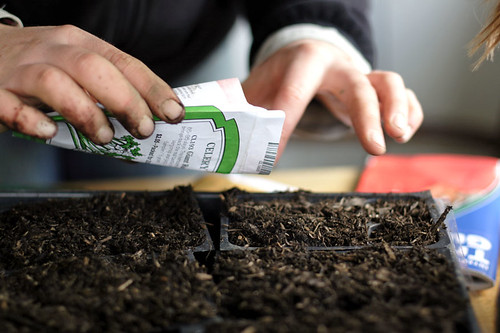
  8. Once your growing medium is saturated, you can plant your seeds. Follow the instructions on the seed packet for planting depth. Or use starter plants from your local nursery. Carefully wash the lose medium from the bedding plant roots before putting the plants in the plant bed.
  9. Once you have planted the seeds, the growing medium will need to be kept moist with nutrient solution. This is done by raising the bucket (flooding the grow bed) and lowering the bucket (draining the grow bed). This should be done several times a day to maintain a proper moisture level in the growing medium surrounding the plant roots.


You can automate this hydroponic garden by adding a small pump in your nutrient reservoir to flood the grow bed and a timer to start and stop the pump.

Choose Wildflowers for growing

There is no one who doesn't love the hepatica. Before the spring has really decided to come, this little flower pokes its head up and puts all else to shame. Tucked under a covering of dry leaves the blossoms wait for a ray of warm sunshine to bring them out. These embryo flowers are further protected by a fuzzy covering. This reminds one of a similar protective covering which new fern leaves have. In the spring a hepatica plant wastes no time on getting a new suit of leaves. It makes its old ones do until the blossom has had its day.

http://farm4.static.flickr.com/3436/3363920362_dfc18dd734.jpg
Photo: blueberrygirl

Then the new leaves, started to be sure before this, have a chance. These delayed, are ready to help out next season. You will find hepaticas growing in clusters, sort of family groups. They are likely to be found in rather open places in the woods. The soil is found to be rich and loose. So these should go only in partly shaded places and under good soil conditions. If planted with other woods specimens give them the benefit of a rather exposed position, that they may catch the early spring sunshine. I should cover hepaticas over with a light litter of leaves in the fall.

During the last days of February, unless the weather is extreme take this leaf covering away. You'll find the hepatica blossoms all ready to poke up their heads. The spring beauty hardly allows the hepatica to get ahead of her. With a white flower which has dainty tracings of pink, a thin, wiry stem, and narrow, grass-like leaves, this spring flower cannot be mistaken. You will find spring beauties growing in great patches in rather open places.

Plant a number of the roots and allow the sun good opportunity to get at them. For this plant loves the sun. The other March flower mentioned is the saxifrage. This belongs in quite a different sort of environment. It is a plant which grows in dry and rocky places. Often one will find it in chinks of rock. There is an old tale to the effect that the saxifrage roots twine about rocks and work their way into them so that the rock itself splits.


Anyway, it is a rock garden plant. I have found it in dry, sandy places right on the borders of a big rock. It has white flower clusters borne on hairy stems. The columbine is another plant that is quite likely to be found in rocky places. Standing below a ledge and looking up, one sees nestled here and there in rocky crevices one plant or more of columbine. The nodding red heads bob on wiry, slender stems. The roots do not strike deeply into the soil; in fact, often the soil hardly covers them. Now, just because the columbine has little soil, it does not signify that it is indifferent to the soil conditions.


For it always has lived, and always should live, under good drainage conditions. I wonder if it has struck you, how really hygienic plants are? Plenty of fresh air, proper drainage, and good food are fundamentals with plants. It is evident from study of these plants how easy it is to find out what plants like. After studying their feelings, then do not make the mistake of huddling them all together under poor drainage conditions. I always have a feeling of personal affection for the bluets. When they come I always feel that now things are beginning to settle down outdoors. They start with rich, lovely, little delicate blue blossoms. As June gets hotter and hotter their colour fades a bit, until at times they look quite worn and white. Some people call them Quaker ladies, others innocence.

Under any name they are charming. They grow in colonies, sometimes in sunny fields, sometimes by the road-side. From this we learn that they are more particular about the open sunlight than about the soil. If you desire a flower to pick and use for bouquets, then the wild geranium is not your flower. It droops very quickly after picking and almost immediately drops its petals. But the purplish flowers are showy, and the leaves, while rather coarse, are deeply cut.

This latter effect gives a certain boldness to the plant that is rather attractive. The plant is found in rather moist, partly shaded portions of the woods. I like this plant in the garden. It adds good colour and permanent colour as long as blooming time lasts, since there is no object in picking it.

There are numbers and numbers of wild flowers I might have suggested. These I have mentioned were not given for the purpose of a flower guide, but with just one end in view your understanding of how to study soil conditions for the work of starting a wild-flower garden. If you fear results, take but one or two flowers and study just what you select. Having mastered, or better, become acquainted with a few, add more another year to your garden. It is a real study, you see. I think you will love your wild garden best of all before you are through with it.

Common Nutrients that Every Growing Hydroponic Plant Needs

No matter what type of garden that is grown plants need the samenutrients. The way these nutrients are supplied is the difference.For example, hydroponic planting requires a different method ofsupplying nutrients to plants than does the traditional soilplanting method.

In hydroponic gardening, the fertilizer that is given to plants hasall the nutrients that plants need. In soil gardening, thefertilizer used for plants does not contain all the nutrientsneeded, because some of them are in the soil. This is the biggestdifference, but nevertheless both methods of planting do not changethe type of nutrients that plants need, which are 16 major ones inall.

Some of the major nutrients that plants need are listed as follows:
  • Nitrogen: This nutrient helps promote the growth of new leaves onplants.
  • Phosphorous: Roots of plants mostly need this material to helpsupport the plant. In addition, this material helps aid the plantblooming process.
  • Potassium: This mineral helps build a plants immune system. Inaddition, Potassium also helps a plant to grow in extreme cold andheat.
  • Sulfur: This substance aids in giving leaves a rich dark greencolor.
  • Calcium: This nutrient along with phosphorous helps the roots ofplants to grow. It also aids in helping new shoots of plants togrow as well.
  • Magnesium: This is what helps produce the chlorophyll, thesubstance that gives plants its green color and helps the plant toabsorb sunlight in order to make food.

The above list of plant nutrients needed is commonly known asmacronutrients. The three most important of these is usuallythought of to be the Nitrogen, Phosphorous, and Potassium. However,all of these help aid in successful plant growth.

Other plant nutrients needed are commonly known as micronutrients,which are usually needed in smaller numbers than themacronutrients. These include Boron (B), copper (Cu), cobalt (Co),iron (Fe) manganese (Mn), molybdenum (Mo), and zinc (Zn).

When plants receive the right nutrients they are able to producetheir own food. This is done by way of a process of photosynthesis,which happens with the use of elements such as carbon dioxide,hydrogen, and light. This produces carbohydrates, which suppliesenergy for plants, and oxygen is a by-product which is necessaryfor all living creatures.

One thing you want to keep in mind when attempting to construct andmaintain a hydroponic garden is that these types of gardens requiremore of a continuous nutrient supply. However, one mistake thatgardeners make is to over-do the amount of nutrients that theysupply to their plants.

Ordinarily roots will absorb water that a plant needs in order forthat plant to live and grow. This process is called osmosis.However, if too many nutrients are added to the growing medium(i.e. peat moss, gravel) or too many nutrients are added to theplant's water supply, it could burn the roots of plants up and/ordry them out (reverse osmosis instead of osmosis).

Much more is involved in the process of growing plants thehydroponics way than what is mentioned in this article. You canread other articles like this one to help educate your self morethoroughly about this process. In addition, you can read otheronline or print material that is dedicated to the study ofhydroponics.

This type of gardening has become more and more widely accepted. Infact, even commercial crop producers are using the hydroponicmethod. It may cost more initially. However, the production rate ofthis type of gardening is thought of to be well worth for manyfarmers. In addition, many hobby gardeners can enjoy the fact thatthey can make this garden indoors in a small space.

This type of gardening benefits all those who try it. It also canbe helpful for preserving the environment as well, especially ifyou use the water culture method, which produces very little waste.

For more information check out the whole package at homemade-hydroponics.com

Can Plants Grow Without Soil? Hydroponic Gardening is the Answer!

By Tony Buel

Hydroponic Gardening is the system in which plants can be made to grow without soil. Using hydroponics to grow plants can be beneficial for many growers since it allows plants to be grown much faster and many times with less problems.

Plants are grown in a solution which consists of water and dissolved nutrients required for the particular plant. There are several hydroponics techniques and systems that are used in producing thriving plants


Hydroponic Book

The different types of hydroponics systems and techniques include the nutrient film technique (or NFT), aeroponics, and the aeration technique.

With the aeroponics technique, plants are secured using rigid pipes, screens, or films. The nutrients are dissolved into the plants' water supply and the plants' roots are suspended within the water. The plant then obtains its food nutrients directly from the water or from an air mist which is sprayed directly onto the plant roots.

Hydroponic gardening also requires the use growing media. Different mediums can be used which have to retain the food rich moisture. They must also be able to physically support the plant roots. The following have been the most effective media so far: expanded clay, perlite, styrofoam, sand, rockwool, vermiculite, pea gravel.

Many types plants that can be grown in a hydroponics system. Some plants will grow better in hydroponics system than others, but some of the most popular are lettuce, tomatoes, cucumbers, herbs, watercress, and various other edible plants.

Tree seedlings and flowers can also be grown using hydroponics. Hydroponic greenhouses have been producing millions of plant seedlings every year. These are then transplanted and grown at other locations where they are later planted into soil.

If you are just a beginner at hydroponic gardening, you will no doubt be satisfied with the quality of your crops and the faster rate of growth. Hydroponically grown plants will grow and mature faster and yield an earlier harvest of vegetable crops.

There are many benefits to growing your own plants in a hydroponics system. Hydroponic gardening doesn't require a fertile farmland or a large water supply growing plants. Vegetable and plants can be grown year round. Hydroponic vegetables and plants in almost any small space, or a basement, or even an apartment balcony.

The hydroponic systems require less space because the plant roots don't have to spread and search for food and water. The smaller space requirement makes hydroponic gardening perfect for limited space home gardeners.

Hydroponic plants can also be grown in nurseries and greenhouses as well. The benefit of growing these plants without soil in a sterile medium includes not having to remove weeds or dealing with soil-borne pests and diseases. And since all the nutrients necessary for the plant are readily avaliable to it, the plant is noticeably healthier than the plants grown in soil.

The greatest benefit to hydroponic gardening is the ability to automate the hydroponics system with timers and remote monitoring equipment. This reduces the time it takes to maintain the plants and the growing environment. It also allows the grower to leave their system for long periods of time without worrying about watering plants.

Hydroponic growing without the use of soil is not simple, but with time it will become an easy routine. Hydroponics offers the advantage of many techniques that can be beneficial to your plants and produce a richer and healthier plant.

Author of Hydroponic Gardening: Tony Buel Hydroponic Gardening Article Found at: Hydroponic Gardening -Grow Without Soil

Common Causes of Orchid Disease

Preventing orchid disease requires persistent attention to the condition of your plants. By recognizing the symptoms early you can prevent a curable condition from becoming fatal. Discover some of the tell-tale signs that require your immediate attention.


Photo: orchidboard.com

- An Ounce of Prevention.
One of the best defenses in protecting your plant from orchid disease is constant observation and inspection. Careful handling of your plants will allow you to spot symptoms of disease so you can take immediate action to remedy the cause.

THE EIN GEDI TECHNIQUE

Keep your eyes open: the Ein Gedi technique is coming your way.

And for good reason. There's no waste of nutrient with Ein Gedi. Derivations such as "aeroponics" (which is discussed in my book at http://www.mayhillpress.com) and "aero-hydroponics" are popping up all over the horizon.

Though the technique works amazingly well, the expense of setting it up and getting it into action has deterred many growers. But after looking at the many advantages this technique offers, many growers are beginning to have second thoughts.


Hydroponics Guide
Photo from : www.astrogrow.com

You see, the Ein Gedi (or aeroponics, etc) method recirculates its nutrient in a misty spray which is aimed at the air roots of a plant. Let me explain. A plant has three major growth sections: the top or "above-ground" section, the air root section, and the root section. A grower has to pay attention to all three.

In the Ein Gedi (read "aeroponics, etc.") technique, plants are plugged into holes at the top of an enclosed chamber. Their roots are allowed to dangle in the dark below and rest in a nutrient solution. BUT between the roots near the bottom of the chamber and the plant hole at the top you will find the air roots of the plant.

The aeroponics method has the same setup as does aero-hydroponics. But the last two have deeper nutrient streams below. All three methods use a misting device to spray oxygenated nutrient onto the air roots. The Ein Gedi method uses a spinner close to the surface of the nutrient pool below. As the spinner spins, nutrient runs up the shaft and sprays out into the chamber.

Aeroponics has a spinner suspended between the top of the chamber and the nutrient pool below. The nutrient spray is spun out from that spinner. Aero-hydroponics goes one step further. Although it too has a device for spraying dissolved oxygen upon the air roots, this method relies more heavily in having more dissolved oxygen in the nutrient pool at the bottom of the chamber.

But mainly, it's the air roots with which these methods are concerned. These roots are constantly sprayed with a mist of nutrient and oxygen which gives the plant the energy it needs. The nutrient below also becomes infused with oxygen so the entire root becomes energized. And the plant grows faster and produces a larger crop.

There is no nutrient waste because the nutrient spray is recirculated after it hits the air roots and then falls to the bottom of the chamber to be recirculated and sprayed again. There is little waste of any other kind, making this technique very desirable to any grower.

The initial investment is quite large as compared to other techniques. You need the long chambers which hold the plants, you need a sprayer setup to accommodate all the roots hanging down inside each chamber. But once the system is setup, the savings can go on forever. No more media to buy, less and less nutrient to supply, and so forth.

Dutch growers who up until now have relied upon rockwool for their growing needs have begun to look at other techniques. With rockwool the Dutch growers could let the nutrient go through on a one-way trip, that is until their government told them they had to stop polluting the ground water with excess nutrient.

So let's look at it again: the Ein Gedi method as well as aeroponics are pretty much the same. Both use the misting method for the roots section of a plant to give the plant the dissolved oxygen it needs. These two methods don't rely as much on the plant roots being immersed in the nutrient solution. Whereas aero-hydroponics gets most of its success from root immersion.

The other variation, known as aero-hydroponics, was developed by Dr. Hillel Soffer who has been associated with the Ein Gedi methods first developed in Israel. This is the method which uses both the spray for the air roots and nutrient immersed roots. His method is getting quite a lot of attention. Aero-hydroponics is very useful for propagating various plants, particularly plants which heretofore have been difficult to propagate.

For more information on this last method, contact General Hydroponics, P O Box 1576, Sebastapol, CA 95473-1576 1-800-374-9376 mailto:info@genhydro.com

Share

Twitter Delicious Facebook Digg Stumbleupon Favorites More